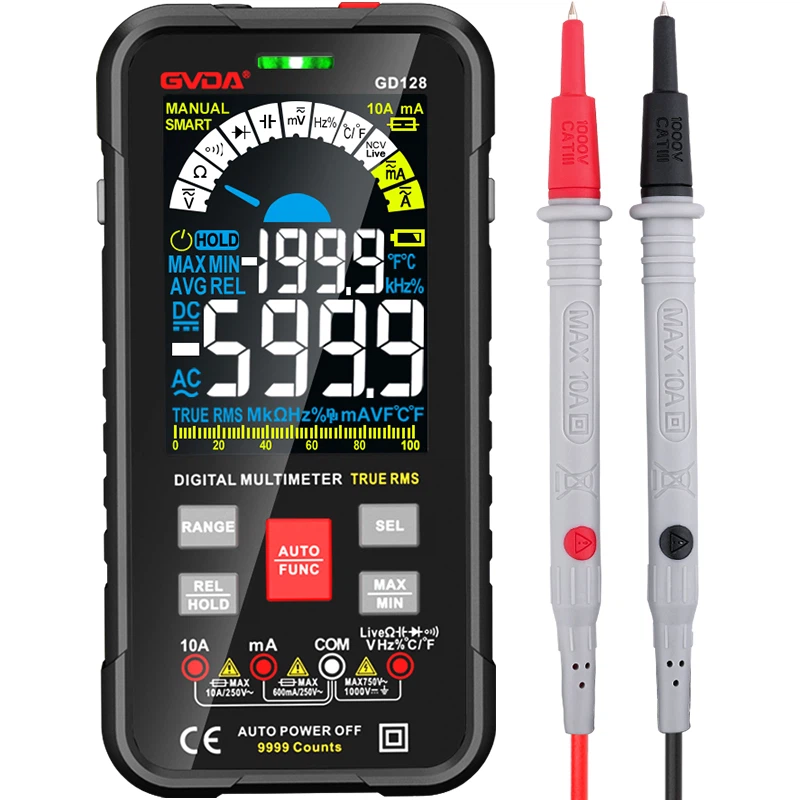
The multimeter can measure the resistance of the object to be measured, the AC and DC voltage, and measure the DC voltage. Some multimeters can also test the main parameters of transistors and the capacitance of capacitors. So how does a multimeter measure the current? Let's take a look at the method of measuring the current with a multimeter.
When measuring the current, if you don’t know how big the current is, first adjust the multimeter to the current gear, then slowly adjust it from high to low, disconnect one foot of the line, and the positive and negative poles of the test leads are connected in series in the line. Be sure to distinguish the communication with DC.
How to measure current with a multimeter
1. Select the range
The DC current range of the multimeter is marked with three ranges: 1mA, 10mA, and 100mA. Choose the size in the circuit, and if you don't know it, use the maximum range.
2. Measurement method
(1) Connect the circuit to make the light-emitting diode emit light normally.
(2) Select the range of the multimeter.
(3) Disconnect the lead between the middle point of the potentiometer and the negative pole of the light-emitting diode, and the light-emitting diode will go out.
(4) Connect the multimeter in series at the breakpoint. The breakpoint connected to the positive pole of the power supply should be connected to the red test lead, and the breakpoint connected to the negative pole of the power supply should be connected to the black test lead. The diode will glow again. The scale value pointed by the pointer of the multimeter is the current value of the light-emitting diode.
(5) Read out the current value passing through the light-emitting diode.