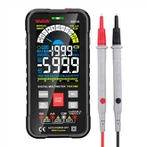
How to use a multimeter to measure 4~20mA sensors
1. Test it by the current gear of the multimeter, the steps are as follows:
The red pen of the multimeter is connected to the hole position of mA, and the black pen is connected to COM.
Set the multimeter to DC mA.
The red pen of the multimeter is connected to the positive terminal of the 4-20mA sensor output, and the black pen is connected to the negative terminal of the 4-20mA sensor output.
Read the number from the display area of the multimeter, and the number read is the current value.
2. Measured by the universal voltage file of the multimeter, for the multimeter without current test function, the current value can be measured by voltage, the steps are as follows:
In the 4-20mA sensor output, access to the sampling resistance of about 100 ohms.
The red pen of the multimeter is connected to the mA hole, and the black pen is connected to COM.
Set the multimeter to DC V.
The red pen of the multimeter is connected to the positive pole of the 4-20mA sensor output, and the black pen is connected to the negative pole of the 4-20mA sensor output.
output of the 4-20mA sensor, and the black pen to the negative terminal of the 4-20mA sensor output.
Read the signal from the display area of the multimeter, which is the voltage value, and divide the read signal by the resistance value (e.g. 100 ohm) to get the current value.
Use the DC current function of the multimeter, 20mA gear (if not, choose 100mA gear), and directly test the sensor output can be. If it is a desktop digital multimeter can also use any sensor function to let the instrument directly test the physical quantities sensed by your sensor Wiring method: red pen to the green line, black pen to the yellow line