Instructions for use of constant temperature soldering iron
1. Preparation of the new constant temperature soldering iron before use:
Before using a new constant-temperature soldering iron, the soldering iron tip must be plated with a layer of solder before it can be used normally. When the constant-temperature soldering iron is used for a period of time, an oxide layer will be formed on and around the blade surface of the soldering iron tip, causing "tin eating". "If it is a difficult phenomenon, you can file off the oxide layer and re-plat it with solder.
2. How to hold a constant temperature soldering iron:
a. Reverse grip: hold the handle of the constant-temperature soldering iron in the palm of your hand with your five fingers. This method is suitable for high-power constant temperature electric soldering irons to weld parts that dissipate large amounts of heat.
b. Forward grip method: Hold the constant temperature soldering iron handle with four fingers except the thumb, and press the thumb along the direction of the soldering iron. The soldering iron used in this method is also relatively large, and most of them have curved soldering iron heads.
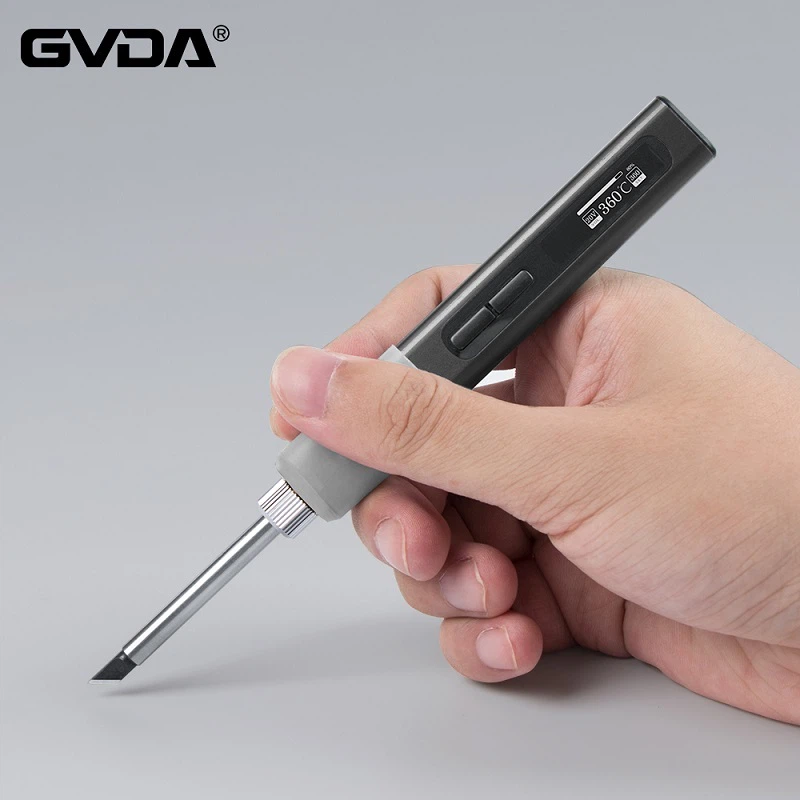
c. Pen holding method: Hold the constant-temperature soldering iron like a pen. It is suitable for low-power soldering irons and welding small parts to be welded.
3. Welding steps:
During the welding process, tools should be placed neatly and the constant-temperature soldering iron should be held steadily and aligned. For general contact welding, it is best to use rosin-laced tubular solder wire. Hold the handle of the constant-temperature soldering iron in one hand and the soldering wire in the other.
1. One method is to quickly contact the heated and tinned soldering iron tip with the cored wire, and then contact the solder joint area, using the molten solder to help the initial heat conduction from the soldering iron to the workpiece, and then remove the tin wire. Remove the soldering iron tip from the soldering surface.
2. One method is to touch the soldering iron tip to the pin/pad and place the tin wire between the soldering iron tip and the pin to form a thermal bridge; then quickly move the tin wire to the opposite side of the soldering point area.
However, what usually occurs is the use of inappropriate temperature, too much pressure, extended retention time, or a combination of the three, which causes damage to the PCB or components.