Introduction to Capacitance Testing Methods Using Multimeters
1. Measure directly using capacitance mode
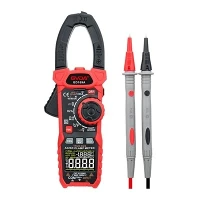
Some digital multimeters have the function of measuring capacitance, and their ranges are divided into five levels: 2000p, 20n, 200n, 2 μ, and 20 μ. When measuring, the two pins of the discharged capacitor can be directly inserted into the Cx socket on the meter board, and the display data can be read after selecting the appropriate range. 000p range, suitable for measuring capacitors less than 2000pF; 20n range, suitable for measuring capacitance between 2000pF and 20nF; 200n range, suitable for measuring capacitance between 20nF and 200nF; 2 μ level, suitable for measuring capacitance between 200nF and 2 μ F; 20 μ F is suitable for measuring capacitance between 2 μ F and 20 μ F.
Experience has shown that some models of digital multimeters (such as DT890B+) have significant errors when measuring small capacity capacitors below 50pF, and measuring capacitors below 20pF has almost no reference value. At this point, the series method can be used to measure small capacitance values. The method is to first find a capacitor with a capacitance of about 220pF, measure its actual capacity C1 with a digital multimeter, and then combine the small capacitor to be tested with it to measure its total capacity C2. The difference between the two (C1-C2) is the capacity of the small capacitor to be tested. This method is very accurate for measuring small capacitance of 1-20pF.
2. Measure with resistance mode
Practice has proven that the charging process of capacitors can also be observed using a digital multimeter, which actually reflects the changes in charging voltage in discrete digital quantities. If the measurement rate of a digital multimeter is n times per second, then during the process of observing the charging of a capacitor, n independent and sequentially increasing readings can be seen every second. Based on the display feature of a digital multimeter, it is possible to detect the quality of capacitors and estimate the size of their capacitance. The following is a method of using a digital multimeter to detect capacitors in the resistance range, which is of practical value for instruments that have not set the capacitance range. This method is suitable for measuring large capacity capacitors ranging from 0.1 μ F to several thousand microfarads.
Set the digital multimeter to the appropriate resistance range, with the red and black probes respectively touching the two poles of the tested capacitor Cx. At this point, the displayed value will gradually increase from "000" until the overflow symbol "1" is displayed. If "000" is consistently displayed, it indicates an internal short circuit in the capacitor; If overflow is consistently displayed, it may be due to an open circuit between the internal poles of the capacitor, or it may be due to an inappropriate resistance level selected. When checking electrolytic capacitors, it is important to note that the red probe (positively charged) should be connected to the positive terminal of the capacitor, and the black probe should be connected to the negative terminal of the capacitor.
3. Measure with voltage range
Measuring with voltage range is actually an indirect measurement method, which is the most accurate measurement method. Set the multimeter to DC current mode, connect the red and black probes to the capacitor, charge the capacitor, and calculate the capacitance using the formula. There are many methods for measuring capacitance with a multimeter. The measurement principle is to use the change in the reading on the multimeter as the amount of electricity charged increases during the charging process, and the current passes through it, in order to measure the size of the capacitance. A multimeter is a precision instrument, but there are also some precautions to be taken when using it, such as not making mistakes in the connection of the red and black probes, and not shifting the power voltage range to avoid damage to the instrument.