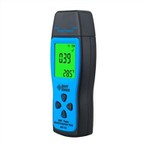
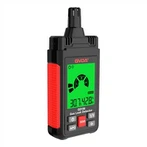
In addition to measuring whether objects are charged, low-voltage electroscopes can also help people do some other measurements:
(1) Judging the induction electric
When measuring a long three-phase line with a general electroscope, even if the three-phase AC power supply lacks one phase, it can be judged which power supply is out of phase (the reason is that the line is long and the capacitance between the parallel lines is Exist, causing a phase-deficient wire to generate induced electricity, causing the neon tube of the test pen to light up). At this time, a small capacitor of 1500pF can be connected to the neon tube of the electroscope (the withstand voltage should be greater than 250V), so that the electropen can emit light as usual when measuring the live line; Not bright or slightly bright, according to which it can be judged whether the measured power supply is inductive electricity. (The guessing principle is that a small capacitor can discharge the AC induced current (small current), but cannot discharge the AC current with a large current, there is a certain danger, try it carefully).
(2) Determine whether the AC power is in phase or out of phase
Hold a test pen in each hand, stand on an insulating object, and touch the two pens to the two wires to be tested at the same time. If the neon tubes of the two test pens are not too bright, it means that the two wires are in the same phase; If the neon tubes of the two electroscopes emit a very bright light, it means that the two wires are out of phase.
(3) Distinguish between alternating current and direct current
When the alternating current passes through the electroscope, the two levels in the neon tube will light up at the same time; when the direct current passes through, only one pole of the neon tube will light up.