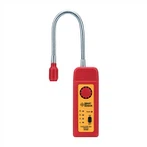
Introduction to what the common faults of gas detectors are
Long term use, improper storage, and use of gas detectors may cause malfunctions and reduce their lifespan. So, what are the common gas detector malfunctions?
1. Unable to display correctly
If a gas detector is used for a long time or not calibrated for a long time, the problem of reading errors may occur. We all know that gas detectors mainly detect through internal sensors, which have a certain lifespan. After a certain number of uses, the sensitivity of the sensor decreases, which affects the detection results. In addition, if calibration is not carried out for a long time, it will also affect the detection results.
2. The gas detector cannot inhale air
This type of problem mainly occurs in pump suction gas detectors. By using a small suction pump inside the detector to suck in gas for detection, if the suction pump is damaged or malfunctions, it will cause the gas detector to be unable to suck in. This problem is easy to solve by replacing the suction pump with a new one.
3. Gas detector malfunction
This type of malfunction is prone to occur in special working environments, such as when there is a lot of dust and oil pollution in the detection environment, which can contaminate the gas detector and cause it to malfunction. In such environments, it is necessary to clean the gas detector.
1. Fixed gas detector:
This is a commonly used detector in industrial equipment and production processes. It can be installed at specific detection points to detect specific gas leaks. Fixed detectors are generally two-piece, with a detection head composed of sensors and transmitters installed as a whole on the detection site, and a secondary instrument composed of circuits, power supplies, and display alarm devices installed as a whole in a safe place for easy monitoring. Its detection principle is as described in the previous section, but it is more suitable for the continuous and long-term stability required for fixed detection in terms of process and technology. They also need to be selected based on the type and concentration of the gas on site, and attention should be paid to installing them in specific areas where the gas may leak, such as selecting the most effective height for sensor installation based on the specific gravity of the gas, and so on.