Learn about the application of anemometers.
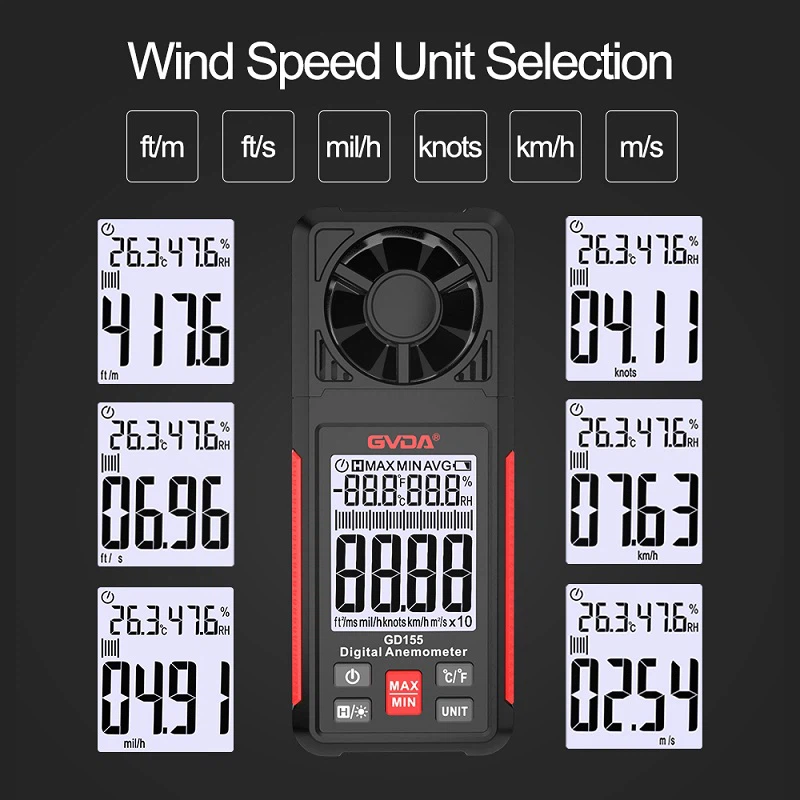
Anemometers have a wide range of applications and can be flexibly used in various fields. They are widely applied in power, iron and steel, petrochemical, energy conservation and other industries. They were also adopted in multiple scenarios during the Beijing Olympic Games. Sailing, rowing, field shooting and other events all required anemometers for wind speed measurement.
Modern anemometers are highly advanced. Besides wind speed, they can simultaneously measure air temperature and air volume. Many industries rely on anemometers, including offshore fishing, fan manufacturing, and sectors equipped with ventilation and exhaust systems.
Wind direction in the atmosphere constantly changes with seasons and geographical conditions. For example, coastal wind directions differ between day and night, and distinct monsoons occur in winter and summer. The study of wind direction assists in climate prediction and research, for which anemometers are essential. Most anemometers adopt an arrow‑shaped design, while some are shaped like animals such as roosters. The vane section rotates according to wind direction. Anemometers shall be installed in open areas free from wind obstruction caused by buildings, trees and other barriers.
Application Scope
The QDP series hot‑ball electric anemometers are widely used in heating, ventilation, air conditioning, meteorology, agriculture, refrigeration and drying, occupational hygiene investigation and other fields. They serve as basic instruments for low wind speed measurement to detect indoor, outdoor and model airflow velocity. This product was awarded as a high‑quality product by the Beijing Municipal Economic Commission in 1987.
Working Principle
The instrument consists of a hot‑ball sensor and a measuring meter. The sensor tip contains a tiny glass ball, inside which a nichrome heating coil and two series‑connected thermocouples are installed. The cold junctions of the thermocouples are fixed on phosphor copper supports and directly exposed to airflow. When a specified current passes through the heating coil, the glass ball is heated to a certain temperature, which varies with airflow velocity. The temperature rises at low flow speeds and drops at high flow speeds.