Methods and steps for measuring capacitors with a multimeter
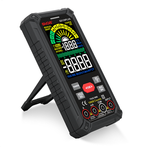
A multimeter consists of three main parts: the meter head, the measurement circuit and the changeover switch. Multimeter is the most basic tool in the field of electronic testing and a widely used testing instrument. Multimeter is also known as multi-meter, triple meter (A, V, Ω that is, current, voltage, resistance, three), multiplex meter, multimeter, multimeter is divided into pointer multimeter and digital multimeter, there is also an oscilloscope with oscilloscope function of the oscilloscope multimeter is a multi-functional, multi-range measurement instrument. General multimeter can measure DC current, DC voltage, AC voltage, resistance and audio level, etc. Some can also measure AC current, capacitance, inductance, temperature and semiconductor (diode, transistor) of some parameters. Digital multimeter has become mainstream, has replaced the analog meter. Compared with analog meters, digital meters have high sensitivity, high accuracy, clear display, strong overload capacity, portable, and easier and simpler to use.
Capacitor, usually referred to as its ability to hold a charge as capacitance, with the letter C to indicate. Definition 1: Capacitor, as the name suggests, is 'a container for electricity', a device that holds an electric charge. English name: capacitor. capacitor is one of the electronic components used in a large number of electronic devices, widely used in circuit isolation through the cross, coupling, bypass, filtering, tuning circuit, energy conversion, control, etc.. Definition 2: Capacitor, any two conductors (including wires) that are insulated from each other and are close together constitute a capacitor.
Measurement of larger capacity capacitors (5000P or more), the multimeter pointer will quickly swing right and then gradually return to the left end, the pointer stops pointing to the resistance value of the insulation resistance of this capacitor. Insulation resistance the larger the better, generally should be close to ∞ if the pointer does not move, the capacitor has been disconnected, after swinging does not return, the capacitor leakage is serious, can not be used. Smaller capacity (5000P or less) capacitor test needle basically does not move.
Electrolytic capacitor is a polarized capacitance test should be connected to the red pen electrolytic capacitor negative, black pen connected to the positive pole, the larger the capacitance, the larger the needle swing, each measurement should be shorted to both ends of the capacitor will be charged on the capacitor charge off.
Test crystal diode
Measure the forward resistance of the diode. The smaller the resistance value, the better.
Measure the diode reverse resistance. The larger the resistance value, the better.
Testing Crystal Triode
Measure the transistor penetration current. NPN-type tube as shown (PNP-type pen opposite) ce inter-pole resistance should be very large, the larger the value of this resistance, the smaller the transistor penetration current, the better the stability of the work, if the hand holding the tube, the resistance value decreases gradually, the stability of the transistor is very poor.
Measurement of triode amplification in the previous measurement based on the triode cb between the poles plus a 100K resistor, the needle should swing to the right the larger the angle of swing, the greater the triode amplification. (If there is no resistance, you can also use your left hand to pinch the bc poles at the same time to replace the human body resistance.