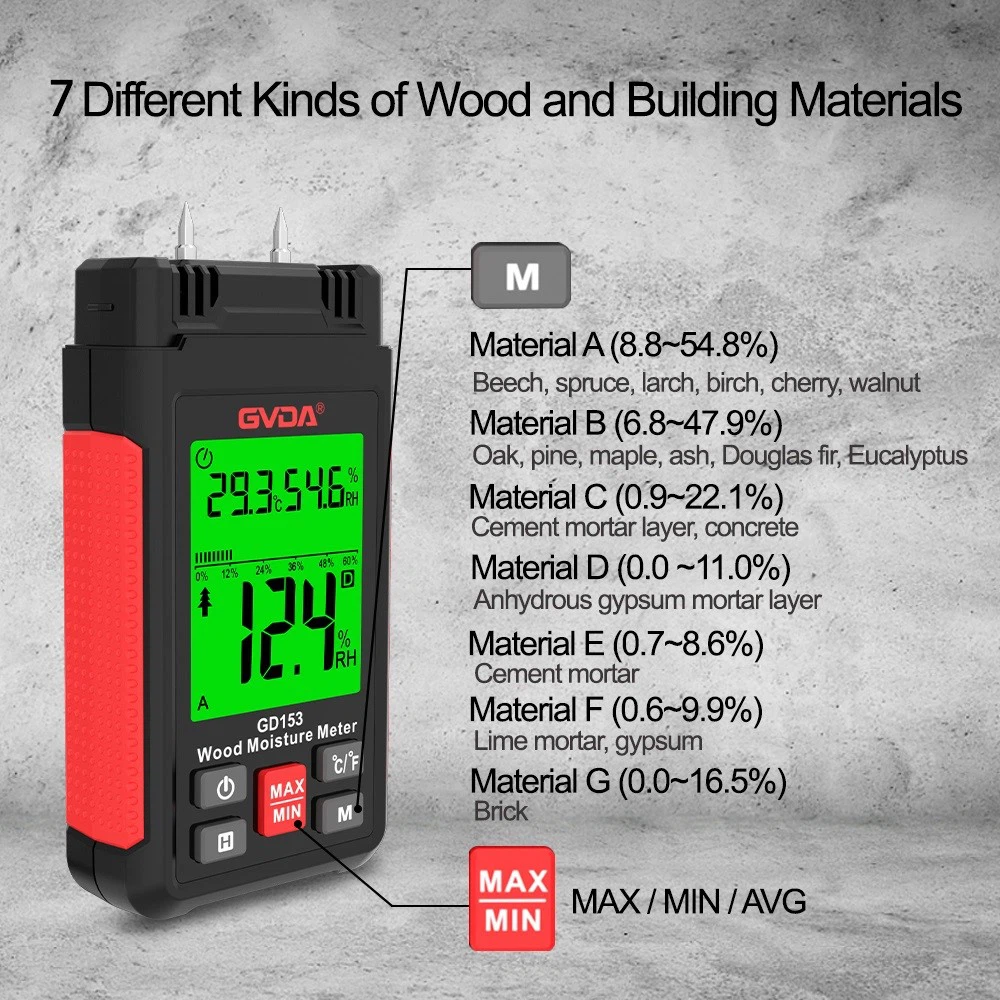
Moisture meters in three unconventional applications
Most people are familiar with the common use of moisture meters as tools for construction workers and water damage restoration professionals±. However, these devices are used for more than just making sure that concrete slabs meet ASTM F-2170 standards and that rooms once affected by moisture intrusion are now dry again.
What are some of these unconventional uses for moisture meters? Here are three lesser-known uses for moisture meters, taken from our "Moisture Meters 101" guide:
Use #1: Checking the Effectiveness of Your HVAC System
This is a common scenario, especially for people living in hot, humid areas along the coastline; the building's thermostat is reading a nice, cool 74°F, but everyone is sweating. You're not sure if the HVAC is working properly, if the thermostat itself is broken, or if the room's ambient humidity is just making you feel like you're covered in sweat.
A thermo-hygrometer can be used in buildings to take readings of both the actual temperature and the relative humidity in the room. The results of the thermo-hygrometer readings are compared to the thermostat. Is the temperature reading close to the temperature given by the thermostat? If so, what is the relative humidity of the room? The answers to these questions may tell you if your HVAC system is in a state of total wear and tear, or if the high moisture content in the building is uncomfortable.
With a thermo-hygrometer, you can diagnose the problem without the expense of hiring a professional HVAC technician to investigate, or at least know that you need one.
Use #2: Pest Control
Did you know that common household pests such as ants, termites, cockroaches, and mice are absorbed into high levels of water? For years, pest control professionals ± have used this fact to identify the highest concentrations of pests in buildings in order to eliminate the problem.
How do exterminators find these areas of high humidity? By using hygrometers to pinpoint the source of moisture in the structure.
Using these devices, the exterminator can locate pockets of water hidden in structural materials, track its possible sources, and plant baits, poisons, and traps as needed. Additionally, he or she can alert the owner of the building to the source of moisture so that it can be removed, thereby eliminating a source of nutrition for unwanted pest animals.
It is important to remove these pests when they are found because they can cause serious damage to the building and its materials. For example, rats can chew through electrical wires, termites will eat wooden support structures, and many other pests can be carriers of different diseases, making them a threat to human health.
Use #3: Improve Workplace Health and Safety
Damp building materials jeopardise the health and safety of people in the workplace. Not only do damp drywall, wood floors and even concrete create the risk of mould, which can be a health hazard for people with sensitive respiratory systems, they can act as a breeding ground for bacteria.
The combination of mould and bacteria can help to increase the incidence of illness in people who work near these health hazards. By using moisture meters to locate damp building materials, building owners can find these risky areas to colonise with bacteria and remediate them, thus reducing the risk of workers becoming ill (leading to a corresponding reduction in the number of sick days used).