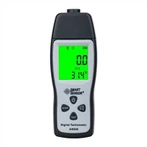
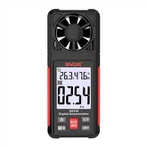
When using the multimeter, you should be familiar with the meanings of various symbols on the instrument panel and the main functions of each knob and selector switch. You should check whether the pointer points to the zero position. If it is not at the zero position, you can adjust the mechanical zero position on the cover. adjuster to return the pointer to zero. Then according to the type and size of the measured, turn the selector switch to the corresponding gear, and find out the corresponding scale on the pointer dial.
Measurement of voltage and current
Like measuring voltage and current with a voltmeter and ammeter, when measuring voltage, a pointer multimeter should be connected in parallel with the line, and when measuring current, a multimeter should be connected in series with the line. In addition, when measuring DC voltage and current, you should also pay attention to the polarity of the test leads (the general guideline is that black is negative and red is positive). The maximum value may be in what range, or choose the one with the largest range of the meter, and then gradually reduce the range to obtain accurate readings. The range should be larger than the measured value, otherwise the instrument may be damaged.
The actual value of the line under test is determined by this formula: actual value = pointer reading × range / full offset scale
In the formula: the full scale scale refers to the maximum scale value on the selected scale. For example: use a pointer multimeter to measure the DC voltage, the range is selected as 100V, the full offset scale is 50, and the pointer is at 20, then the actual value = 20×100/20=40V.
resistance measurement
Select the appropriate magnification gear: When measuring resistance, it is advisable to select the magnification gear so that the pointer stays on the thinner part of the scale line. The closer the pointer is to the middle of the scale, the more accurate the reading; the farther to the left, the tighter the scale line is, and the less accurate the reading is. The magnification block should be smaller than the measured value. Zero adjustment: Before measuring the resistance, the test leads should be touched together, and the colleague rotates the "zero adjustment knob" (the larger knob on the right edge of the multimeter as shown on the right above), so that the pointer just points to the zero position of the ohm scale , this step is called ohmic "zeroing". This step must be repeated before measuring the resistance every time the magnification gear is changed, which is an essential step to ensure accurate measurement. If the pointer cannot be adjusted in place, it means that the battery voltage is insufficient or there is a problem with the instrument circuit. Do not measure resistance with electricity: when measuring resistance, the multimeter is powered by batteries, and the resistance to be measured must not be charged, because the measurement with electricity is equivalent to connecting an extra power supply, not only the correct measurement data will not be obtained, but also the meter head may be damaged. . The actual value of the resistance to be measured comes from this: the actual value of the measured resistance = magnification × pointer reading. If the resistance reading is 25 when measured on a 1000-rate block, then the resistance value of the measured resistance is 25×1000=25000 ohms. Diode measurement
As we all know, there are generally positive and negative poles on the diode. When you see the section with the white coil on the shell, it is the negative pole. Or the shorter side of the wire is the negative pole. But what if these features are not present?
A multimeter is a tool that electricians have in their hands. When using the ohm range of the multimeter (resistance measurement) to measure the positive and negative resistance of the diode, since the multimeter is connected to a battery, pay attention to the terminal marked with "-" on the multimeter case. The black test leads are connected; the red test leads of the terminals marked "+" on the case are connected. The current flows out from the red test lead and flows back from the black test lead. In addition, the ohm gear of Rx1000 should be used for measurement, because the current of Rx1 gear is too high, and the voltage of Rx10K gear is too high, which are easy to damage the diode, so it is not suitable for selection.
The specific test method is shown in the figure on the right. Connect the two test leads of the multimeter to the two pins of the diode respectively. The forward resistance of the diode is very small, generally tens of ohms to hundreds of ohms, while the reverse resistance is very large, generally between tens of thousands of ohms to hundreds of thousands of ohms. If in the two tests in the figure, the right test shows a small resistance, and the left test shows a large resistance, it can be concluded that the pin connected to the red test pen on the right is the positive pole of the diode, and the other pin is the negative pole.
On some modern digital multimeters, there may be a gear for judging whether the diode is good or bad (on-off gear). Set the multimeter at this gear for measurement. If there is a reading, the red test pen will be the positive pole. If there is no reading or "1" is displayed, it is black. The test leads are positive.
Diode is good or bad judgment
It is still the above measurement method using the multimeter resistance file to judge. If the measured forward and reverse resistances are very different, it means that the unidirectional conductivity of the diode is good; if the two measured resistance values are very small or large, it means that the diode has lost unidirectional conductivity. Bad diodes with quality problems.