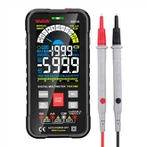
Questions about pH meter calibration method
There are many types of electrical meters due to different designs, and their operating steps are different. Therefore, the operation of the pH meter should be carried out strictly in accordance with its instruction manual. In specific operations, calibration is an important step in the application operation of pH meters.
Resistor R is not connected, and the temperature compensator of the instrument is adjusted to 25°C (or a certain intermediate temperature point of the temperature compensator). Calibrate the instrument according to the instrument manual, and then
Use the calibration instrument to input the standard signal pH input to the electric meter, record the pH indication value of the electric meter respectively, measure once by increasing and decreasing the input, and take the average value to calculate the error of the electric meter indication value.
During the calibration, it was found that for smart calibration instruments, various manufacturers’ instrument manuals propose various calibration methods. In order to adapt to different measurement needs, different pH scales are used inside the instrument. Some instruments integrate different pH scales into the instrument at the same time. , you can choose according to your measurement needs. In order to improve the measurement accuracy, the optional calibration points of the instrument are generally set to 2 to 3 points, and some instruments even reach 7 points. Most instruments allow simultaneous calibration points of 1 to 2 points, some allow 3 points, and some allow 3 points. Even allows 5 or more points to be calibrated simultaneously. Calibration protocols for instruments vary. But no matter how it changes, in fact the core of calibration is still to solve the E0 and k in the Nernt formula (E=E0-k×pH) piece by piece in order to convert the potential value measured by the electrode into the corresponding pH value.
It can be seen that the requirement for the instrument calibration method in the calibration regulations is "calibrate the instrument according to the instrument instruction manual." This kind of calibration is different from the requirements for the calibration method when the instrument is used in the instruction manual. The calibration procedure requires that the electric meter part of the secondary meter be calibrated with reference to the calibration method in the instruction manual, and the calibration method of the instrument design is to fully consider the electrode characteristics of the pH sensor. Due to the linearity of the electrode and the influence of acid-base errors, different calibration points are required for the acidic and alkaline intervals of the solution, or even different segments of the same interval. In order to fit the linearity of the sensor well, the corresponding calibration points will be selected accordingly. calibration point. This requires that we must correctly understand the meaning of calibration in the regulations, grasp the characteristics of the secondary meter in the electrical part of the pH meter, and use reasonable methods to calibrate the instrument.
Intelligent pH meters have become mainstream products on the market. Since each company uses different pH scales, calibration points, and calibration schemes, if such a complex instrument calibration method is not analyzed during calibration, the meter's indication value will inevitably be affected. Errors in the calibration results will have an impact. Therefore, users should pay attention to their calibration procedures to avoid improper use, which may affect the measurement results.