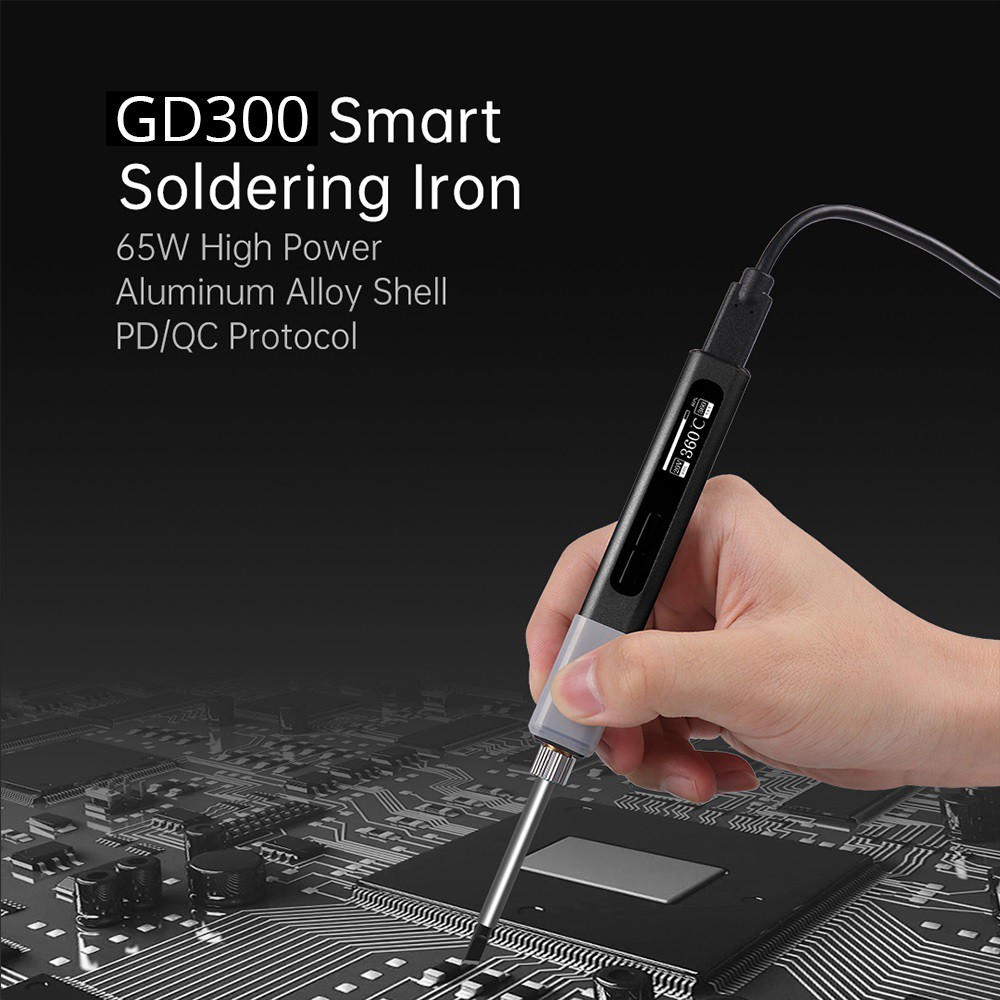
Several methods of soldering leads on circuit boards.
Printed circuit boards are divided into 2 types: single-sided and double-sided. The through holes on it are generally non-metallised, but in order to make the components soldered on the board more secure and reliable, nowadays most of the through holes in the printed circuit boards of electronic products are taken to be metallised. The method of soldering the leads to an ordinary single panel:
(1), straight through the cut head. Leads directly through the through-hole, welding so that the appropriate amount of melted solder in the pad above the tin evenly surrounded by the lead, forming a cone mould, to be cooled and solidified, the excess part of the lead cut off. (See the board for specific methods)
(2), directly buried. Through the through-hole leads only exposed to the appropriate length, the melted solder to the lead head buried inside the solder joint. This type of solder joint approximates a hemisphere, and although it is aesthetically pleasing, special care should be taken to prevent false soldering.
(3) Prevent bad soldering
Welding technology is a radio enthusiasts must master the basic technology, need more practice to master.
1, choose the right solder, should be used to weld electronic components with a low melting point solder wire.
2, flux, with 25% rosin dissolved in 75% alcohol (weight ratio) as flux.
3, soldering iron to be used before the tin, the specific method is: the soldering iron will be hot, to be just able to melt the solder, coated with flux, and then evenly coated with solder in the soldering iron head, so that the soldering iron head uniformly ate a layer of tin.
4, the welding method, the pad and component pins with fine sandpaper grinding clean, coated with flux. With the soldering iron tip dipped in the appropriate amount of solder, contact the soldering point, to be soldered on the soldering point of all melted and submerged components lead head, the soldering iron head along the component pins gently up a pick, leave the soldering point.
5, the welding time should not be too long, otherwise it is easy to burn the components, if necessary, tweezers can be used to clip the pin to help dissipate heat.
6, the solder joint should be sinusoidal wave peak shape, the surface should be bright and rounded, no tin spines, the amount of tin is moderate.
7, after the completion of welding, to use alcohol to clean the circuit board on the residual flux, in order to prevent carbonisation of the flux affects the normal operation of the circuit.
8, integrated circuits should be the last welding, soldering iron should be reliably grounded, or power off after the use of residual heat welding. Or use a special socket for integrated circuits, weld the socket and then insert the integrated circuit.
9, the soldering iron should be placed on the soldering iron stand.