Slope and Emissivity Determination using Infrared Thermometers
how to determine slope
Effective methods for determining slope include measuring the temperature of the object with a probe (such as an RTD), a thermocouple, or other suitable means. After obtaining the actual temperature, adjust the setting of the emissivity until the temperature reading of the sensor head is equal to the actual measured temperature, that is, the correct slope value is obtained.
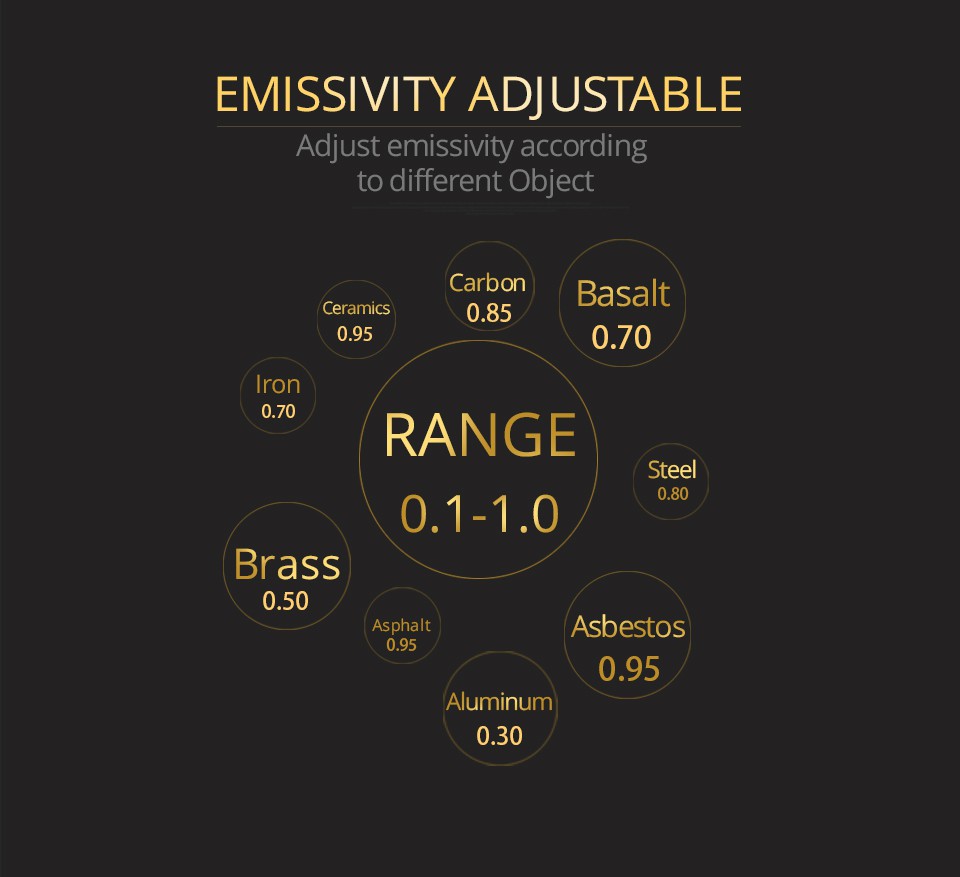
How to Determine Emissivity
1. Use a probe (such as RTD), thermocouple, or other suitable methods to measure the actual temperature of the object. Adjust the value of emissivity until the temperature reading of the sensor head is the same as the actual temperature, that is, the correct emissivity is obtained.
2. If part of the surface of the object can be coated, the surface of the object can be blackened with matte carbon black. At this time, the emissivity is about 0.98. Set the emissivity to 0.98, and measure the temperature of the blackened part. *Then measure the area adjacent to the blackened part of the object and adjust the emissivity until the temperature reading is equal to the actual temperature. This is the correct emissivity.
3 Optimize surface temperature measurements according to the following criteria:
1. Use a measuring instrument to measure the emissivity of an object.
2. Try to avoid reflection; shield the object from the high temperature heat source in the surrounding environment.
3. When the temperature of the object is high, if there are several overlapping wavelengths available, choose a shorter wavelength.
4. For translucent materials, such as glass; when measuring temperature, ensure that the background temperature is uniform and lower than the object temperature.
5. When the emissivity is less than 0.9, the sensor head and the surface of the target object should be kept as vertical as possible. Do not let the angle between the sensor head axis and the surface normal of the object be greater than 45°