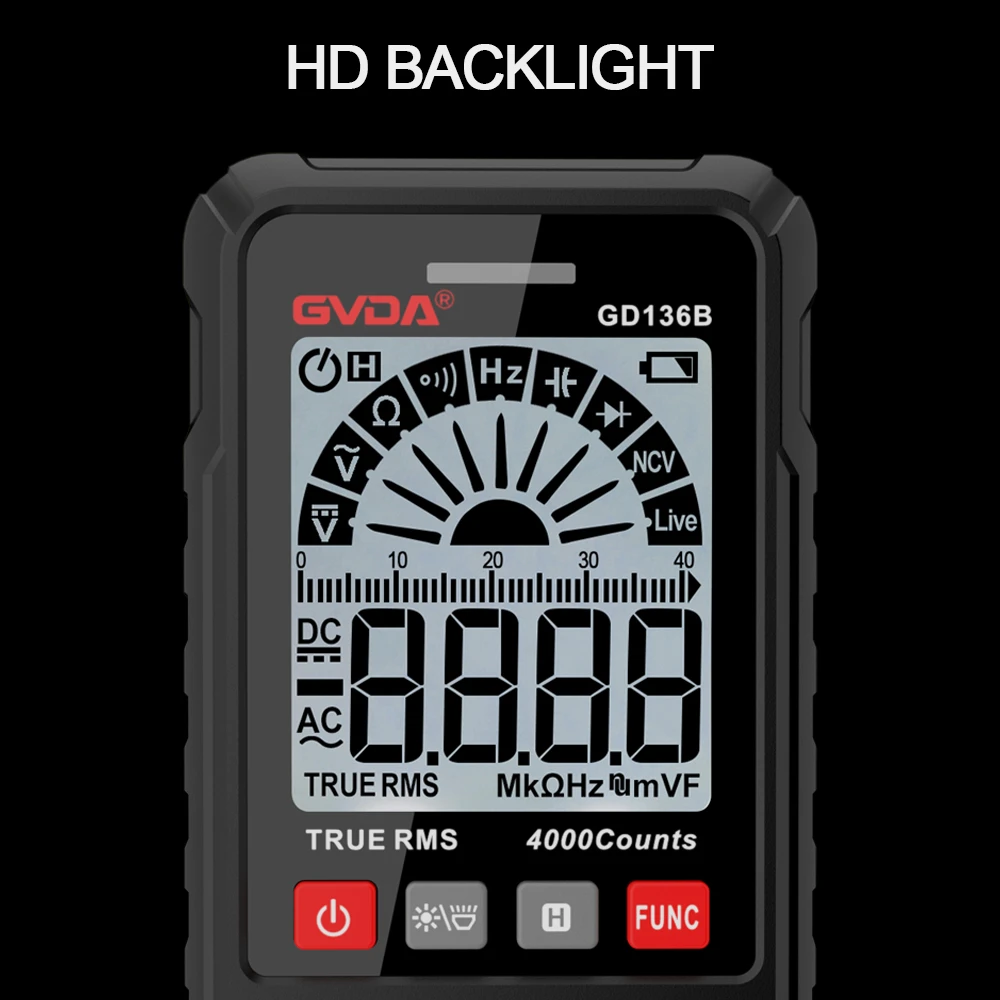
Step-by-Step Instructions for Multimeter Operation
Step 1: Preparation Before using the multimeter, complete the preparation work. First, check the power status of the multimeter to ensure the battery or power cord is properly connected. If it is battery‑powered, verify that the battery has sufficient charge. Next, inspect the test probes to make sure there is no looseness between the plugs and probes. Finally, confirm the physical quantity to be measured and circuit conditions, and select an appropriate measurement range and function.
Step 2: Connect the Measurement Circuit Insert the black plug of the test probe into the COM (Common) terminal jack of the multimeter, and insert the red plug into the VΩmA (Voltage‑Resistance‑Current‑Milliampere) terminal jack. Select the proper terminal jack according to the measured quantity and wiring method.
Step 3: Select Measurement Range and Function Use the rotary selector switch to choose the required measurement range and function. The rotary selector of a multimeter is generally marked with different physical quantities and ranges, such as DCV (DC Voltage), ACV (AC Voltage), DCA (DC Current), ACA (AC Current) and resistance (Ω). Select the corresponding range and function based on the characteristics of the circuit under test.
Step 4: Take the Measurement Touch the metal tips of the test probes to the circuit under test to maintain good electrical contact. When measuring DC or AC voltage, connect the red probe to the positive side and the black probe to the negative side of the circuit. When measuring DC or AC current, connect the probes in series into the current path of the circuit. For resistance measurement, touch the two probes to the two ends of the resistor respectively.
Step 5: Read the Measurement Result During measurement, the digital display of the multimeter shows the corresponding reading. You may need to adjust or switch the range. To read accurately, adjust the zero potentiometer (if available) and range selection so that the reading stabilizes within a suitable range. If the reading is unstable, slightly reposition the probes to ensure reliable contact.