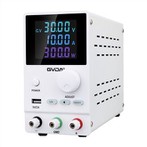
Technical Features of the Digital Multimeter and How to Operate the Panel
A digital multimeter is a small digital multimeter with a three and a half digit LCD display. It can measure AC and DC voltage, AC and DC current, resistance, capacitance, transistor beta value, diode conduction voltage, and circuit short circuiting. The measurement function and range are changed by a rotating band switch, with a total of 30 levels.
The maximum display value of this multimeter is ± 1999, which can automatically display "0" and polarity. When overloaded, it displays "1" or "-1". When the battery voltage is too low, it displays the "←" symbol. The buzzer is used for short circuit inspection.
Technical characteristics of digital multimeter
1. Measurement range
⑴ AC and DC voltage (AC frequency ranging from 45Hz to 500Hz);
The measurement ranges are 200mV, 2V, 20V, and 1000, with a DC accuracy of ± (0.8%+2 words of reading) or less and an AC accuracy of ± (1%+5 words of reading);
The input impedance is 10M Ω in DC mode and 10M Ω and 100PF in AC mode.
⑵ AC and DC currents
The measurement ranges are 200 μ A, 2mA, 200mA, and 10A, with a DC accuracy of ± (1.2%+2 words of reading) and an AC accuracy of ± (2.0%+5 words of reading). The maximum voltage load is 250mV (AC RMS).⑶ Resistance:
The range is divided into six levels: 200 Ω, 2k Ω, 200k Ω, 20M Ω, and 20M Ω. The accuracy is ± (2.0% of the reading+3 words).
⑷ Diode conduction voltage:
The range is 0-1.5V, and the test current is 1mA ± 0.5mA.
⑸ Detection of transistor beta value:
The testing conditions are: VCE=2.8V,IB=10μA.
⑹ Short circuit detection:
Test circuit resistance<20 Ω± 10 Ω 2. Sampling time: TS=0.4S.