Testing the Cranking Voltage of a Storage Battery with a Multimeter
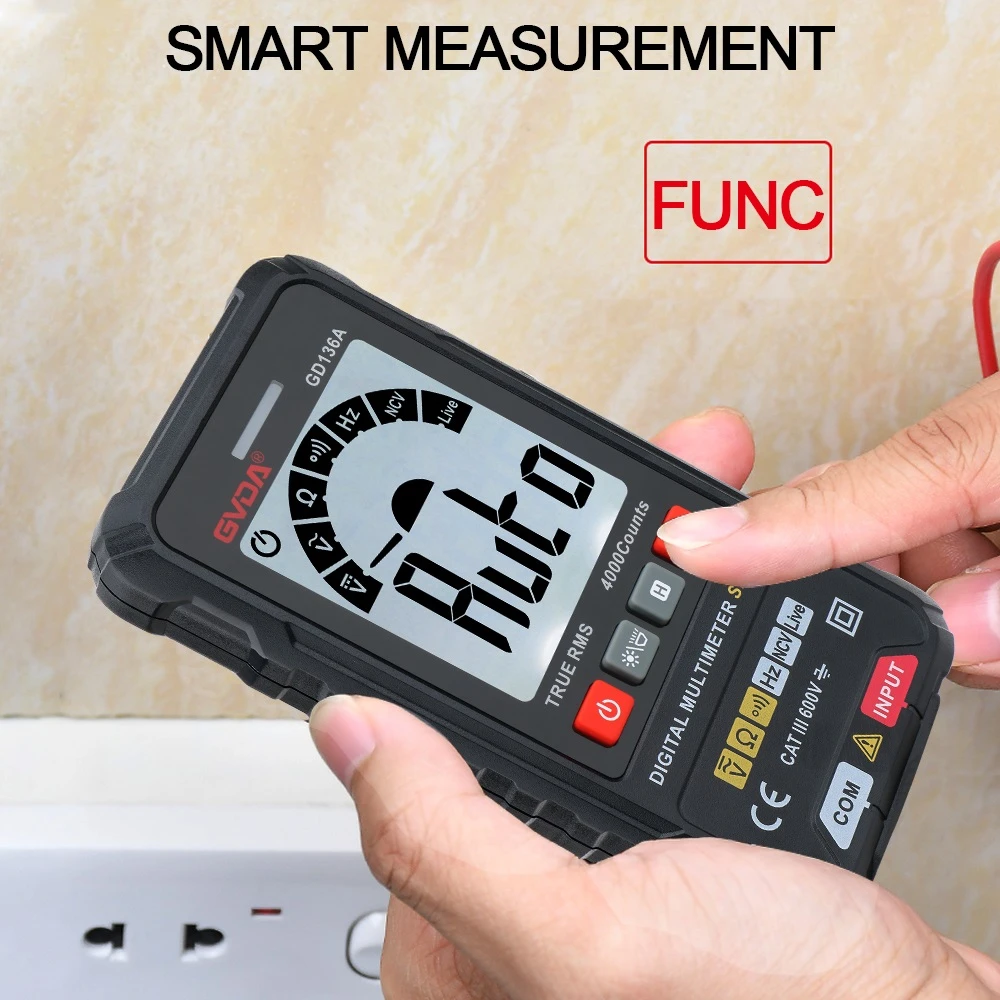
The panel of a multimeter consists of three areas: the display, the function selector switch, and the measurement probe jack zone. True to its name, a multimeter can measure many parameters such as current, voltage, capacitance, resistance and more. Today we will introduce a special measurement to help you gain a deeper understanding of the multimeter:
Testing the Cranking Voltage of a Storage Battery
Passenger cars are generally equipped with a 12 V DC power supply system. First, power on the multimeter and select the 20 V DC voltage range. Connect the red probe to the positive terminal of the storage battery and the black probe to the negative terminal. The reading obtained is the no-load voltage of the battery. Reversing the probes will produce a negative electromotive force, which does not affect the measurement result. Generally, a reading above 12.5 V indicates a fully charged battery. A reading between 11.5 V and 12.5 V means the battery is low and needs charging. If the reading is below 11.5 V, the battery is over-discharged or has an internal fault; inspection is required before charging.
The no-load voltage alone cannot judge whether the battery is depleted. This value is the open-circuit voltage of the battery. With no current flowing, the internal resistance of the battery does not share the electromotive force, so the measured voltage is relatively high. When the battery supplies power in actual use, the electrical load forms a closed circuit through the battery. The internal resistance of the battery will take up part of the electromotive force. As the battery discharges, its internal resistance keeps rising, and the internal voltage drop increases accordingly, which reduces the actual output electromotive force of the battery. Therefore, the cranking voltage test is adopted to check the output voltage of the battery under cranking load conditions.
First, turn on the multimeter and select the 20 V DC voltage range. Connect the red probe to the positive terminal of the storage battery and the black probe to the negative terminal. Start the engine and record the voltage value at the moment of engine cranking; this is the cranking voltage. The cranking voltage shall not be lower than 10 V. A value below 10 V indicates a depleted battery, requiring further inspection of the power system and supplementary charging.