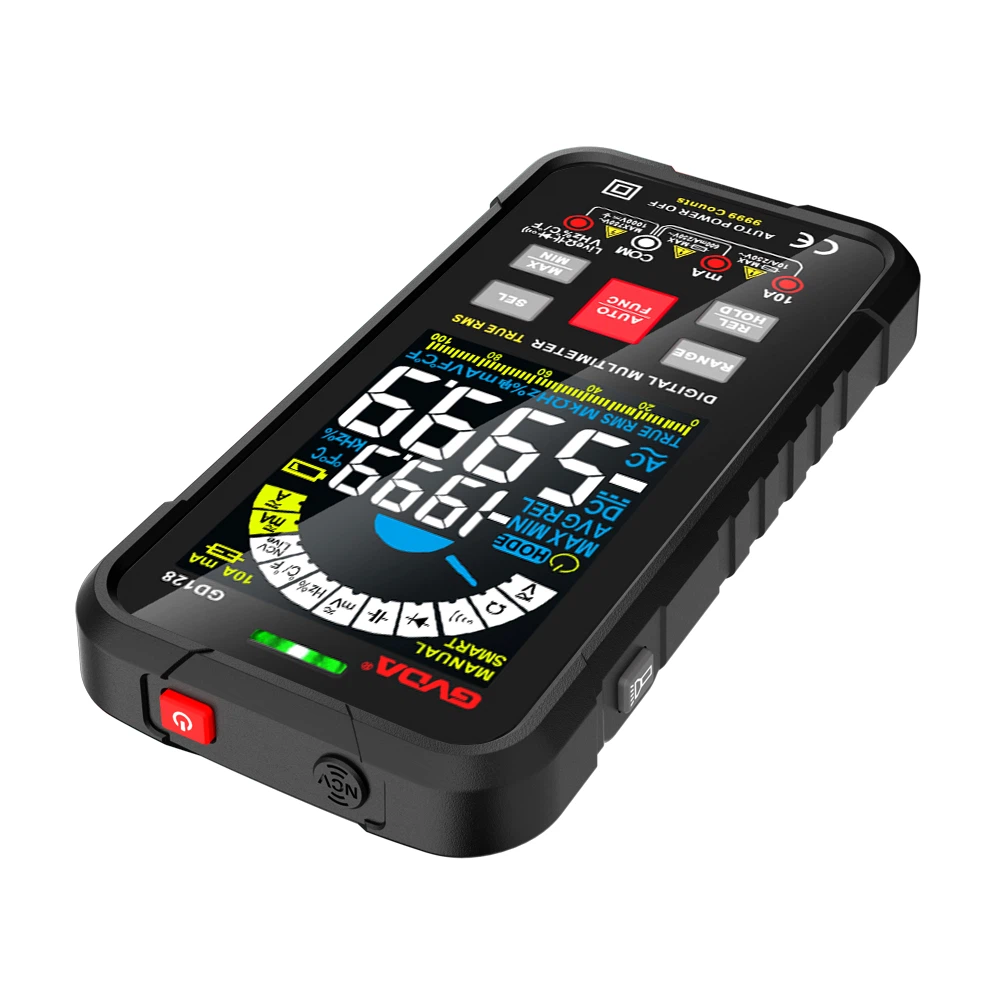
The correct method for measuring resistance with a multimeter
1. Select an appropriate magnification range to keep the pointer as close to the center of the scale as possible to ensure accurate readings. When measuring, the indicated value of the pointer on the scale multiplied by the magnification is the resistance value of the measured resistance.
2. It is not allowed to measure resistance with electricity, otherwise not only will the correct reading not be obtained, but it may also damage the meter head.
3. When measuring the positive and negative resistance of semiconductor components with a multimeter, the R * 100 range should be used, and the high resistance range should not be used to avoid damaging the semiconductor components.
4. It is forbidden to directly measure the internal resistance of micro ammeter, Galvanometer, standard battery and other instruments and meters with the resistance of the multimeter.
5. Before measuring the resistance or after switching to different magnification levels, the two probes should be short circuited and zeroed using the zero adjustment knob. If the zero position cannot be reached, the battery should be replaced.
After the measurement is completed, the transfer switch should be turned to the highest AC voltage or neutral position to prevent the probe from being short circuited and causing battery short circuit discharge. At the same time, it also prevents forgetting to shift to measure voltage during the next measurement and burning the meter head.
Method of measuring small resistance with a multimeter
When measuring resistance with a multimeter, it is reflected that the measured current on the meter head actually passes through the corresponding current of the measured resistance. The larger the measured resistance, the smaller the current, that is, the smaller the deflection angle.
The relationship between the deviation angle of the pointer and the measured resistance is:
α= (RZ θ)/ (RX+RZ)
In the equation: α--- Pointer deflection angle;
RZ - Center resistance value of the multimeter;
RX - measured resistance;
θ--- The angle at which the pointer is fully deflected, usually 90 degrees
From the ohmic scale of the multimeter, it can be seen that its scale is an uneven reverse scale, and the smaller the deflection angle, the greater the indicated resistance value. From: dg51.com Friends of Electricians
There is a significant difference in resistance values between each graduation line at the high resistance end. If the pointer is deviated by an angle on this graduation line during measurement, it will cause significant errors. Especially when measuring small resistors, the error is even more pronounced.
Therefore, to ensure the accuracy of measurement, when measuring small resistance, the shift method should be used to try to keep the pointer near the center position.