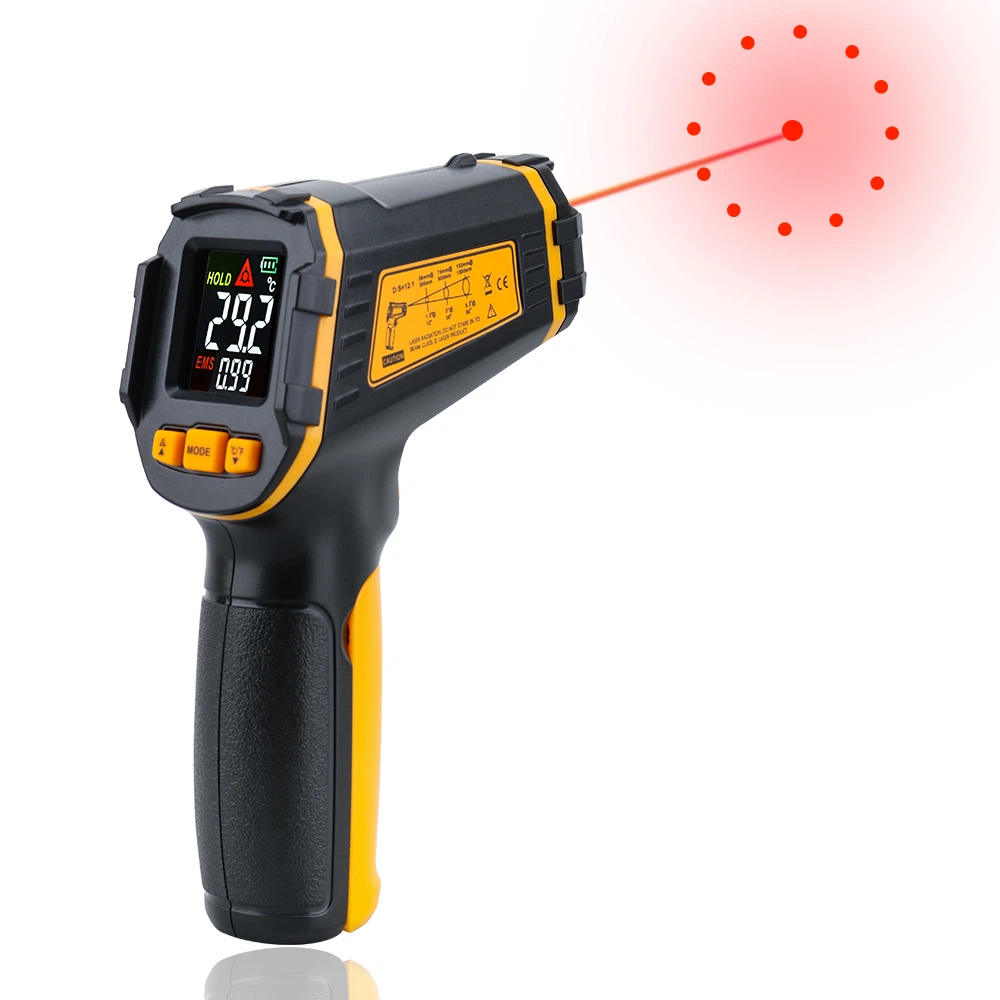
The principle of various thermometers
Thermometer is a general term for temperature measuring instruments, which can accurately judge and measure temperature. The phenomenon of expansion and contraction of solids, liquids, and gases under the influence of temperature is used as the design basis. There are kerosene thermometers, alcohol thermometers, mercury thermometers, gas thermometers, resistance thermometers, thermocouple thermometers1, radiation thermometers, optical thermometers, bimetal thermometers, etc. for us to choose from, but we must pay attention to the correct use method. In order to understand the relevant characteristics of the thermometer and use it better, this book was specially written.
1. Gas thermometers: Hydrogen or helium are often used as temperature measurement materials. Because the liquefaction temperature of hydrogen and helium is very low, close to zero, its temperature measurement range is very wide. This thermometer is very high and is mostly used for precision measurements.
2. Resistance thermometer: It is divided into metal resistance thermometer and semiconductor resistance thermometer, which are made according to the characteristics of resistance value changing with temperature. Metal thermometers mainly use pure metals such as platinum, gold, copper, nickel and rhodium iron, phosphor bronze alloys; semiconductor thermometers mainly use carbon, germanium, etc. Resistance thermometers are easy to use, reliable, and have been widely used. Its measurement range is about -260°C to 600°C.
3. Thermocouple thermometer: It is a temperature measuring instrument widely used in industry. Made using the thermoelectric phenomenon. Two different wires are welded together to form the working end, and the other two ends are connected to the measuring instrument to form the circuit. Set the working end to the temperature to be measured. When the temperature of the working end and the free end are different, an electromotive force occurs, so that a current flows in the loop. By measuring electricity, the temperature at a known location can be used to determine the temperature at another location. This thermometer is mostly composed of copper constantan, iron constantan, nickel constantan, gold cobalt copper, platinum rhodium, etc. It is suitable for two substances with large temperature difference, and is mostly used for high temperature and low turbidity measurement. Some thermocouples can measure high temperatures up to 3000°C, and some can measure low temperatures close to zero.
4. Bimetal thermometer: refers to the thermometer specially used to measure the temperature above 500 ℃, including optical thermometer, colorimetric thermometer and radiation thermometer. The principle and structure of the bimetal thermometer are relatively complicated, and will not be repeated here. It has a measurement range of 500°C to 3000°C or higher and is not suitable for measuring low temperatures.
5. Pointer thermometer: It is a thermometer in the shape of a dashboard, also known as a calorimeter, which is used to measure room temperature and is made by the principle of thermal expansion and contraction of metal. It uses a bimetallic sheet as a temperature sensing element to control the pointer. Bimetals are usually riveted with copper and iron, with copper on the left and iron on the right. Because the thermal expansion and contraction of copper is more obvious than that of iron, when the temperature rises, the copper sheet pulls the iron sheet to bend to the right, and the pointer deflects to the right (pointing to high temperature). Bimetal; vice versa. , the temperature becomes lower, and the pointer is deflected to the left (pointing to low temperature) driven by the bimetallic sheet.
6. Glass tube thermometer: The glass tube thermometer uses the principle of thermal expansion and contraction to achieve temperature measurement. Since the expansion coefficient of the temperature measurement medium is different from the boiling point and freezing point, our common glass tube thermometers mainly include: kerosene thermometer, mercury thermometer, and red pen water thermometer. The advantages are simple structure, convenient use, high measurement accuracy and low price. The disadvantage is that the upper and lower limits and accuracy of the measurement are limited by the quality of the glass and the properties of the temperature-measuring medium. It cannot be teleported and is fragile.
7. Pressure thermometer: The pressure thermometer uses liquid, gas or saturated steam in a closed container to generate volume expansion or pressure change as a measurement signal after being heated. Its basic structure consists of three parts: temperature bulb, capillary tube and indicator table. It was one of the earliest temperature control methods used in the production process. Pressure temperature measurement systems are still a very widely used measurement method for on-site temperature indication and control. The advantages of pressure thermometers are: simple structure, high mechanical strength, not afraid of vibration. Inexpensive and requires no external energy. The disadvantages are: the temperature measurement range is limited, generally -80~400℃; the heat loss is large and the response time is slow; the sealing system of the instrument (thermal bulb, capillary, spring tube) is damaged, maintenance is difficult and must be replaced; the measurement accuracy is affected by the ambient temperature , the installation position of the bulb has a great influence, and the accuracy is relatively low; the transmission distance of the capillary is limited. The normal working range of the pressure thermometer should be 1/2--3/4 of the range, and the display instrument and the temperature bulb should be in the horizontal position as much as possible. The temperature ball mounting bolts used during installation will cause temperature loss, resulting in inaccurate temperature. Thermal insulation treatment should be carried out during installation, and the warm bulb should work in a vibration-free environment as much as possible.
8. Rotary thermometer: The rotary thermometer is made of rolled bimetallic sheets. One end of the bimetal is fixed, and the other end is connected to the pointer. Due to the different degrees of expansion of the two pieces of metal, the bimetallic piece curls differently at different temperatures, and the hands point to different positions on the dial. The temperature can be known from the reading on the dial.
9. Semiconductor thermometer: The resistance change chemical of semiconductor is different from that of metal. As the temperature increases, their resistance decreases and varies more widely. Therefore, a small temperature change can also cause a significant change in resistance. Thermometers are made with high accuracy and are often referred to as temperature sensors.
10. Thermocouple Thermometer: A thermocouple thermometer consists of two different metals connected to a sensitive voltmeter. Metal contacts produce different potential differences across the metal at different temperatures. The potential difference is small, so a sensitive voltmeter is needed to measure it. The temperature can be known from the reading of the voltmeter.
11. Optical pyrometer: If the temperature of an object is high enough to emit a lot of visible light, its temperature can be determined by measuring the amount of thermal radiation. This thermometer is a lightweight thermometer. This thermometer mainly consists of a telescope with a red filter and a set of circuits with a small light bulb, a galvanometer and a variable resistor. Before use, establish the relationship between the temperature corresponding to the different brightness of the filament and the reading of the ammeter. When in use, aim the telescope at the object to be measured, and adjust the resistance so that the brightness of the bulb is the same as the brightness of the object to be measured. At this time, the temperature of the measured object can be read from the galvanometer.
12. Liquid crystal thermometer: Liquid crystals made of different formulas have different phase transition temperatures. When they undergo a phase change, their optical properties also change, making the liquid crystals look discolored. If a piece of paper is coated with liquid crystals with different phase transition temperatures, the temperature can be known from the color change of the liquid crystal. The advantage of this thermometer is that it is easy to read, but the disadvantage is that it is not enough. Often used in ornamental fish tanks to show.