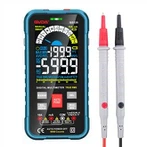
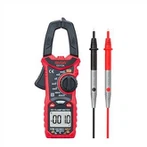
The structure of the measuring current part of the clamp multimeter
Regarding the structure of the current measurement part of the clamp multimeter, the current measurement part of the clamp multimeter is composed of a current transformer and the current measurement part of the multimeter. When using it, turn the range switch to an appropriate current position. The clamp multimeter must not measure high voltage. current in the line.
The measuring current part of the clamp multimeter is composed of the current transformer and the current measuring part of the multimeter.
The iron core of the transformer has a movable part, which is connected with the handle, and the movable iron core is opened by pressing the handle during use. Put the wire of the measured current into the jaw, release the handle to close the iron core.
At this time, the wire passing through the current is equivalent to the primary winding of the transformer, and the induced current will appear in the secondary winding, and its size is determined by the working current of the wire and the ratio of winding turns.
The ammeter is connected to both ends of the secondary winding, so the current indicated by it is the current in the secondary winding, which is proportional to the working current.
Therefore, the calculated scale is used to reflect the amount of current on the primary side. When there is current passing through the wire, the pointer of the ammeter connected to the secondary winding will deflect in proportion to indicate the value of the measured current.
When in use, turn the range switch to an appropriate current position. Hold the meter body and press the switch with your thumb to open the jaws and lead the wire under test into the center of the iron core.
Then, when the switch is released, the iron core will automatically close, and the current of the measured wire will generate alternating magnetic force lines in the iron core, and the current value will be reflected on the meter, which can be read directly.
1. Before using the digital multimeter, read the instruction manual carefully to familiarize yourself with the function of the power switch and the function of the limit switch, input jack, socket, and various function keys, knobs, and accessories.
In addition, you should also understand the limit parameters of the multimeter, the characteristics of overload display, polarity display, low voltage display and other symbol display and alarm, and grasp the changing law of the decimal point position.
Before measurement, carefully check whether the test lead is cracked, whether the insulation layer of the lead wire is damaged, and whether the position of the test lead is inserted correctly to ensure the safety of the operator.
2. Before each measurement, check again whether the measurement items and the limit switch are in the correct position, and whether the input jack (or special jack) is selected correctly.
3. The meter will jump when just measuring, and the display value should be stable before reading.
4. Although there is a relatively complete protection circuit inside the digital multimeter, it is still necessary to avoid operational misoperations as much as possible, such as using a current block to measure voltage, using an electric block to measure voltage or current, and using a capacitor block to measure charged Capacitors, etc., so as not to damage the meter.
5. If only the highest digit displays the number "1" and the other digits are blanked, it proves that the meter has been overloaded and a higher limit should be selected.
6. It is forbidden to toggle the limit switch when measuring a voltage above 100V or a current above 0.5A, so as not to generate an arc and burn the contacts of the transfer switch.
7. The number marked with the danger mark next to the input jack represents the limit value of the input voltage or current of the jack. Once exceeded, it may damage the instrument and even endanger the safety of the operator.
8. The clamp multimeter is not allowed to measure the current of the high-voltage line, and the voltage of the measured line cannot exceed the voltage level specified by the clamp meter (generally no more than 500 volts), in order to prevent insulation breakdown and personal electric shock.
9. The measurement should estimate the size of the measured current and select the appropriate range. Small range gears cannot be used to measure large currents. 10. Before measurement, pay attention to turn the range switch to the corresponding AC current gear, and cannot use voltage gear and resistance Do not use the resistance gear and current gear to measure the voltage, otherwise, if you are not careful, the meter will be burned.
11. Only one wire can be clamped for each measurement. When measuring, the wire to be tested should be placed in the center of the jaws to improve the accuracy of the measurement. It is best to level the body of the watch with your hands, and try not to let the wire lean against the jaws and the body of the watch.
12. After the measurement, the range switch must be turned to the maximum voltage range position, and then the power switch should be turned off. To ensure safe use next time.