The working principle of the electric tester pen and its use
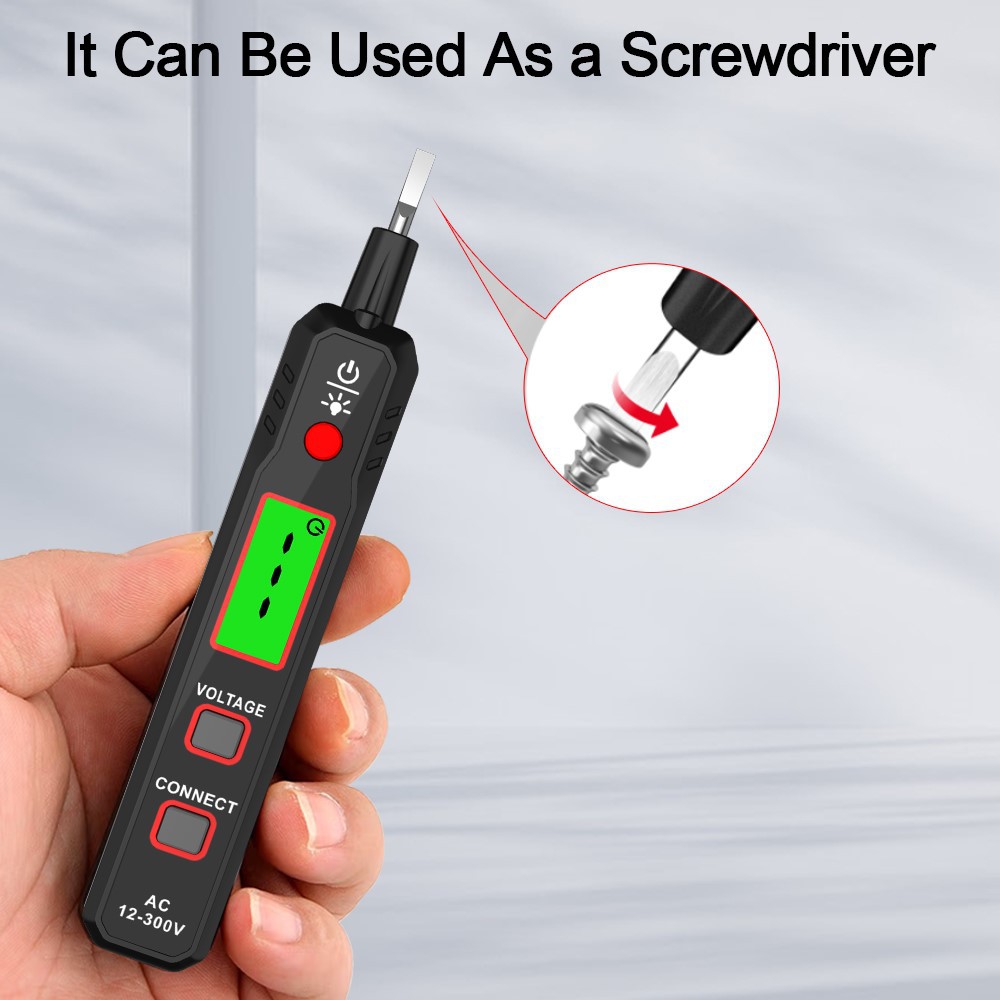
Electricity test pen is the majority of electricians often use one of the tools used to determine whether the object is charged. Its internal structure is a light bulb with two electrodes, the bubble filled with neon gas, commonly known as neon bubble, one of its pole to the tip of the pen, the other pole is connected in series with a high resistance to the other end of the pen. When the voltage between the two poles of the neon bubble reaches a certain value, the two poles will produce a glow between the two poles, the intensity of the glow and the voltage between the two poles is proportional. When the charged body to ground voltage is greater than the beginning of the neon bubble glow voltage, and the tip of the pen to contact it, the other end is grounded through the human body, so the pen will glow. The role of resistance in the electric tester is used to limit the current flowing through the body to avoid danger.
In addition to determining whether an object is electrically charged, the electric tester pen has several other uses:
1) It can be used for low-voltage phase verification, measuring whether any conductors in the line are in the same phase or different phases from each other. Specific method is: stand in an object insulated from the earth, hands each holding a tester pen, and then in the two wires to be tested, if the two tester pen luminous is very bright, the two wires for the phase; Conversely, it is the same phase, it is the use of tester pen neon bubbles in the difference in voltage between the two poles of the neon bubble and its luminous strength is directly proportional to the principle of discrimination.
2) can be used to identify alternating current and direct current. In the test with the pen, if the pen neon bubble in the two poles are glowing, is the alternating current; if the two poles in only one pole glowing, is the direct current.
3) can determine the positive and negative poles of direct current. Will be connected to the test pen in the DC circuit test, neon bubble bright pole is the negative pole, not bright pole is positive.
4) can be used to determine whether the DC ground. In the ground insulation of the DC system, can stand on the ground with a tester to contact the DC system in the positive or negative pole, if the tester neon bubble does not light up, there is no grounding phenomenon. If the neon bubble is bright, it shows that there is a grounding phenomenon, and its bright such as in the pen, it shows that the positive pole is grounded. If the light in the finger end, it is negative grounding. But it must be pointed out that in with grounding
How to use the power test pen
1) in the test whether the electrical appliances and lines are charged before you should first try in the electric ground to see if the pen is intact, in order to prevent errors in judgement and electrocution.
2)When holding the pen, hold the end of the pen with your fingers, and hold the body of the pen with the rest of your fingers.
3) When measuring electricity, the tip of the pen touches the test body and the hand touches the end of the pen. If the test body is charged, the neon tube of the pen will glow; if the neon tube does not glow, it means that the test body is not charged.
4) The insulation of the pen is less than 1 megohm can not be used.