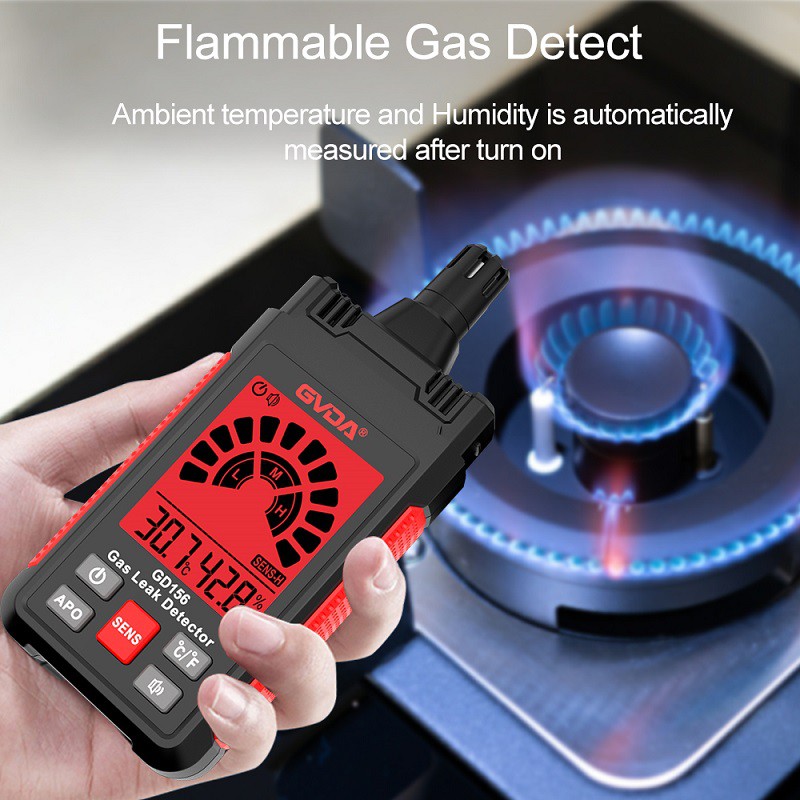
What is the concentration of the combustible gas alarm to alarm?
1. The first level alarm setting value of combustible gas should be less than or equal to 25%LEL.
2. The setting value of the secondary alarm for combustible gas should be less than or equal to 50%LEL.
3. The first-level alarm setting value for linear combustible gas measurement should be 1LEL·m; the second-level alarm setting value should be 2LEL·m.
Among them, LEL is the abbreviation of lower explosion limit in English, which means the lowest concentration at which the mixture of flammable vapor, gas or dust and air can explode when it encounters an ignition source (the concentration of flammable vapor and gas is calculated by volume ratio).
the
If the concentration of combustible gas is too low or too high, it is not dangerous. It will only burn or explode when it is mixed with air to form a mixture or more precisely when it encounters oxygen to form a certain proportion of mixture. Due to the higher proportion of air, generally when monitoring the leakage concentration of combustible gas, it is necessary to monitor its volume concentration value from a very low concentration to the lowest explosion limit, that is, the measurement range is 0~100%LEL.
The concentration alarm value of flammable gas is generally preset in the instrument. According to the regulations in the national standard, the set value of the first-level alarm of flammable gas is not higher than the lower explosion limit of 25% LEL. Therefore, the alarm value of the gas alarm specified in the national standard is the upper limit, as long as it is not greater than this upper limit, it is within a reasonable range. Of course, from a professional and practical point of view, the alarm value of combustible gas should not be too low. If it is too low, false alarms may occur, because too low may conflict with detection errors. As for the specific minimum explosive concentration limit of each flammable gas, you can actually refer to Appendix A in "GBT 50493-2019": Characteristics of common flammable gases and vapors, which not only contain the explosive concentrations of common flammable gases and vapors (V%) upper and lower limits, but also parameters such as boiling point, flash point, and vapor density.