What is the Numerical Aperture in Microscope Parameters?
Numerical Aperture, abbreviated as NA, is a key technical parameter for objectives and condensers, and an important indicator for evaluating their optical performance. Its value is marked on the housing of the objective and condenser.
Numerical Aperture (NA) is the product of the refractive index (n) of the medium between the front lens of the objective and the specimen, and the sine of half the aperture angle (u). Expressed by the formula:
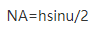
The aperture angle, also known as the angular aperture, is the angle formed between the object point on the optical axis and the effective diameter of the objective front lens. A larger aperture angle allows more light to enter the objective. It is proportional to the effective diameter of the objective and inversely proportional to the focal distance.
During microscopic observation, the aperture angle cannot be increased to raise the NA value. The feasible method is to increase the refractive index n of the medium. Based on this principle, water‑immersion objectives and oil‑immersion objectives were developed. Since the refractive index n of such media is greater than 1, the NA value can exceed 1.
The commonly accepted maximum NA value is 1.4, which was once regarded as the theoretical and technical limit. At present, bromonaphthalene with a refractive index of 1.66 can be used as the medium, enabling NA values higher than 1.4.
Numerical Aperture is closely related to other optical parameters and largely governs them. It is positively correlated with resolution and useful magnification, and inversely correlated with depth of field. As NA increases, the field width and working distance decrease accordingly.