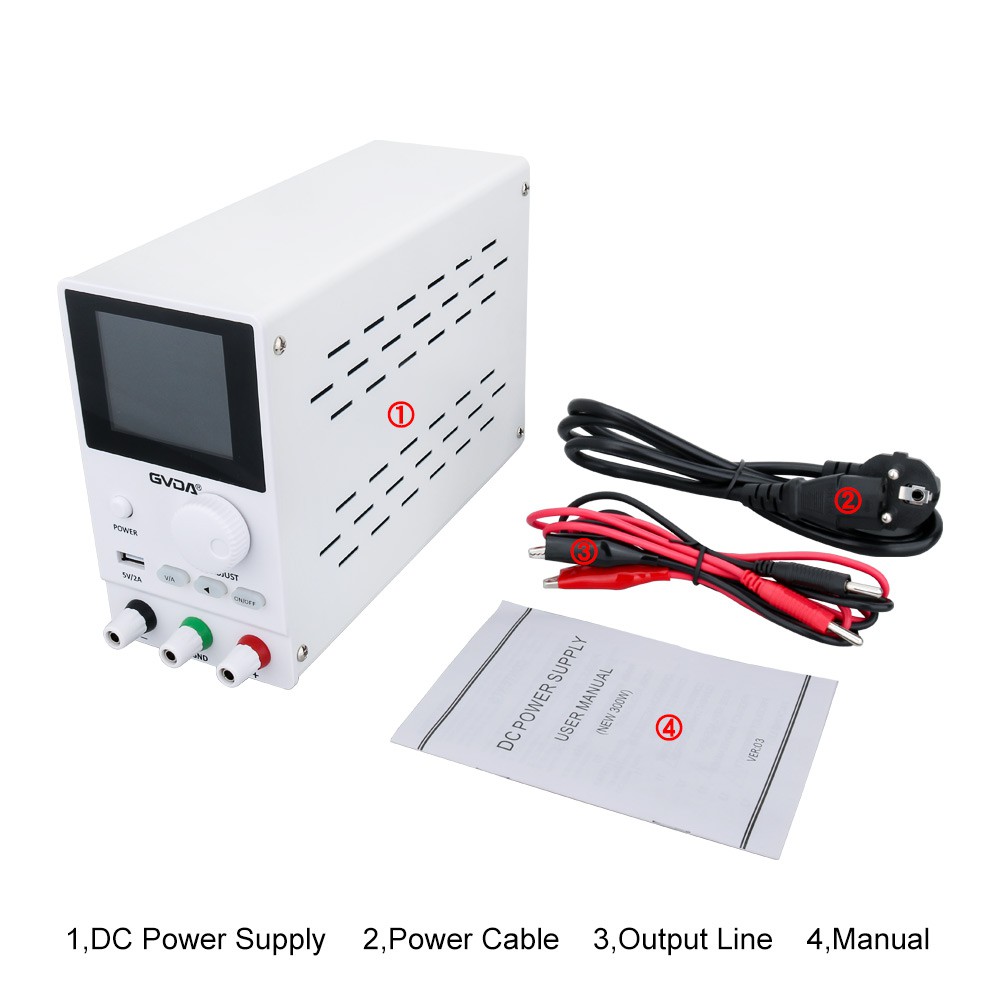
What is thermal design of linear DC power supply? How to do it?
The thermal design of linear DC power supply refers to how to reasonably control and handle the heat of the power supply when designing and operating the linear DC power supply. Due to the electronic components in linear DC power supplies, certain power losses are generated during operation, resulting in heat generation. If not properly designed, excessive heat accumulation can lead to serious consequences such as power failure, damage, and even fire.
Firstly, selecting the correct internal components of the power supply is a crucial step in thermal design. For linear DC power supplies, there are three main parts: transformers, rectifiers, and voltage regulators. Among them, the transformer converts the input AC power into a suitable DC voltage, and the selection of its magnetic core material and wires directly affects the heat loss of the transformer. For high-power linear DC power supplies, iron core transformers are usually used to reduce losses. A rectifier is the part that converts alternating current into direct current, and there are two forms of rectification: thyristor rectification and diode rectification. The power loss of thyristor rectification is relatively high, which generates a large amount of heat. Therefore, appropriate heat dissipation measures are needed, such as auxiliary heat dissipation devices such as heat sinks and fans. A voltage regulator is the part that further stabilizes the voltage. By controlling the current carrying current of the regulator, the power loss and heat of the regulator can be controlled.
Secondly, in thermal design, it is necessary to conduct and dissipate heat reasonably. In the design, it is necessary to consider the structural arrangement of the power supply and the cooling and ventilation system. The structural arrangement of the power supply should be reasonable, and the layout of each part of the power supply should be optimized to avoid heat accumulation in a local area. At the same time, it is necessary to plan the heat dissipation and ventilation system reasonably to provide good heat dissipation conditions for the power supply. Heat conduction and dissipation can be achieved by setting up heat sinks, thermal pads, or heat pipes. In addition, suitable cooling fans and ducts can be selected for air cooling and heat dissipation based on the power and heat generation of the power supply. In the design, it is necessary to ensure that the heat dissipation performance of the power supply meets the requirements and avoid excessive power supply temperature.
In addition, the relationship between the load characteristics of the power supply and heat also needs to be considered in thermal design. Load characteristics refer to the relationship between the output voltage and output current of a power supply, which directly affects the working state and power loss of the power supply. In design, it is necessary to select the parameters of the voltage regulator and load resistance reasonably based on the load characteristics of the power supply, so that the power supply can meet the output requirements while minimizing power loss and reducing heat generation.
When operating a linear DC power supply, the following points should be noted. Firstly, avoid overloading the power supply and do not connect excessive loads to the power output port to prevent the power supply from unstable operation and generating excessive heat. Secondly, regularly check the cooling system and radiator of the power supply to ensure their good working condition. For cooling fans and fins, it is necessary to regularly clean dust and impurities to ensure effective heat dissipation. In addition, attention should be paid to the ambient temperature of the power supply. Do not operate the power supply in a high-temperature environment for a long time to avoid affecting its heat dissipation effect and lifespan.