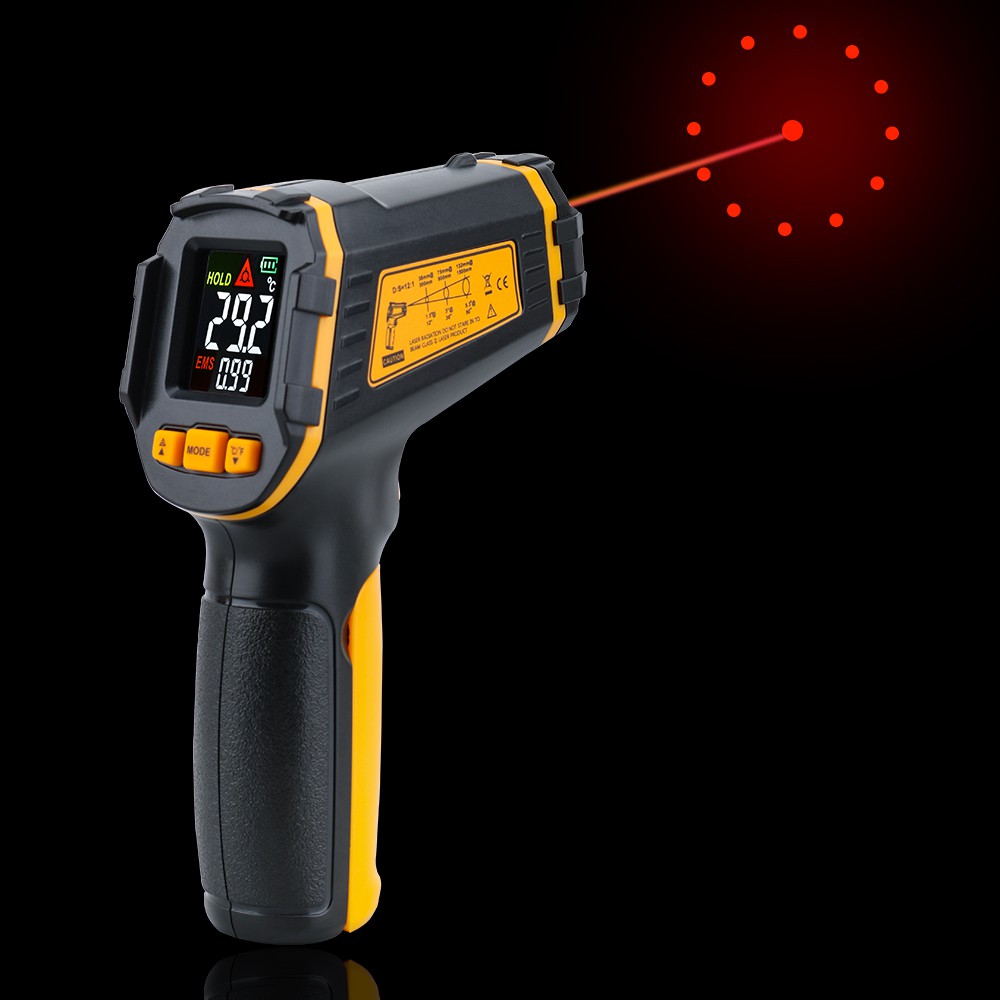
Application of Far-Infrared Thermometers in Equipment Inspection
Limitations of Traditional Temperature Measurement
After the electrical equipment is supplied with current, the temperature of the equipment will change, and its heat generation is proportional to the square of the supplied current; The temperature changes of bearings in rotating electrical and mechanical equipment are closely related to the cooling medium, sliding friction, and rolling friction... Any type of equipment failure is often manifested in the form of temperature changes. It is of great significance to detect changes in equipment temperature, timely judge and discover whether there are abnormalities and faults in the equipment, improve the reliability of equipment operation, extend the service life of equipment, and avoid equipment damage and personal injury. As is well known, the traditional method of measuring temperature during equipment inspection is to use mercury thermometers and alcohol (kerosene) thermometers. Mercury thermometers are greatly affected by electromagnetic fields, while alcohol (kerosene) thermometers have significant errors when measuring equipment with high temperatures. Therefore, the new device temperature measurement tool - far-infrared thermometer - has been widely adopted.
The current application status of the new technology of far-infrared temperature measurement
Far infrared temperature measurement technology is a new non-contact testing technology introduced from European and American countries in China in recent years, which has been widely adopted in the power industry. Far infrared temperature measurement technology is mainly used in power plants and substations to measure the temperature of electrical equipment, that is, to measure the heating and overload conditions caused by the current flowing into the electrical equipment, the faults and overheating of isolating switches and circuit breakers, metal connection parts, and cable head overheating faults. However, it is less commonly used for measuring the bearing temperature of rotating equipment, checking for leaks in sealed containers, detecting steam water separators, and identifying insulation faults in process pipelines or other insulation processes. In my work, I encountered several typical and representative equipment failures discovered through measuring the temperature of non flowing parts of the equipment.