How to Ensure the Measurement Accuracy of Infrared Thermometers
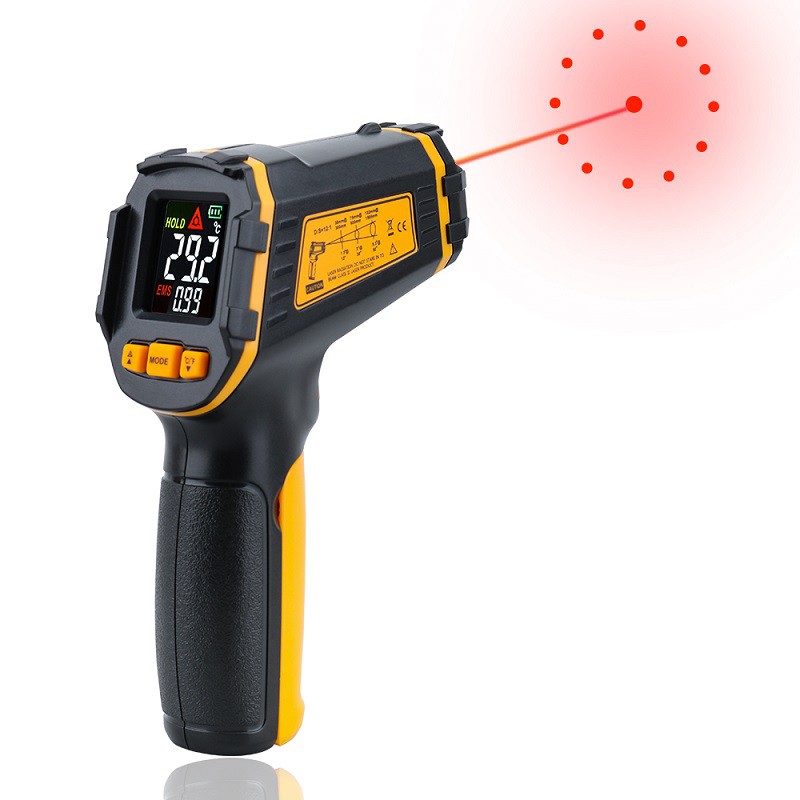
The undisputed understanding of infrared technology and its principles is its temperature measurement. When using an infrared thermometer to measure temperature, the infrared energy emitted by the object being measured is converted into an electrical signal on the detector through the optical system of the infrared thermometer. The temperature reading of this signal is displayed, and there are several important factors that determine the temperature measurement. The most important factors are emissivity, field of view, distance to the light spot, and position of the light spot. Emissivity, all objects reflect, transmit, and emit energy, and only the emitted energy can indicate the temperature of the object. When an infrared thermometer measures surface temperature, the instrument can receive all three types of energy. Therefore, all infrared thermometers must be adjusted to read only the emitted energy. Measurement errors are usually caused by infrared energy reflected by other light sources. Some infrared thermometers can change emissivity, and emissivity values for various materials can be found in published emissivity tables. The other instruments have a fixed preset emissivity of 0.95. The emissivity value is compensated for the surface temperature of most organic materials, paints, or oxidized surfaces by applying a tape or flat black paint to the tested surface. When the tape or paint reaches the same temperature as the base material, measure the surface temperature of the tape or paint to obtain its true temperature. The ratio of distance to spot, the optical system of an infrared thermometer collects energy from a circular measuring spot and focuses it on the detector. The optical resolution is defined as the ratio of the distance from the infrared thermometer to the object to the size of the measured spot (D: S). The larger the ratio, the better the resolution of the infrared thermometer, and the smaller the size of the measured light spot. Laser aiming is only used to assist in aiming at the measurement point. The new improvement of infrared optics is the addition of near focus characteristics, which can provide measurement for small target areas and prevent the influence of background temperature. Field of view, ensuring that the target is larger than the spot size measured by the infrared thermometer. The smaller the target, the closer it should be. When precision is extremely important, ensure that the target is at least twice the size of the light spot.