Classification and application range of gas detectors
In modern society, with the development of industry, more and more gases are produced. Some of these gases are flammable and explosive, and some are poisonous and harmful, which bury a lot of hidden dangers for human life and the atmospheric environment. Therefore, while carrying out industrial production, we must also pay attention to the emission control of various gases, and use various gas detectors to carry out scientific and effective management of gas emissions. There are many classifications of gas detectors, the specific classification is as follows.
According to the method of use, it can be divided into fixed and portable.
1. Fixed gas detector
The fixed gas detector is fixed at the on-site leakage point for real-time gas leakage detection. When the detected gas leaks and the leaked gas concentration reaches the alarm value of the detector, the detector will send out an audible and visual alarm signal and automatically control the opening of the exhaust gas. Fans, solenoid valves and other equipment.
Classification and application range of gas detectors
2. Portable gas detector
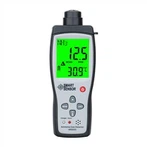
The interior of the portable gas detector includes sensors, measuring circuits, displays, alarms, rechargeable batteries, air pumps and other components. The portable gas detector is small and light in appearance, easy to carry, and has two sampling methods: diffusion type and pump suction type. It is convenient for on-site operators to carry out testing anytime and anywhere.
Classification and application range of gas detectors
According to the classification of sensors, it can be divided into combustible gas detectors; catalytic combustion combustible gas detectors; electrochemical toxic gas detectors, detecting CO, H2S, NO, NO2, CL2, HCN, NH3, PH3 and various toxic organic compounds; Infrared combustible gas detector to detect various combustible gases (according to filtering technology); semiconductor combustible gas detector to detect various combustible gases; thermal conductivity combustible gas detector to detect the difference between its thermal conductivity and air Hydrogen, etc.; toxic gas detector (referred to as poison detector, an instrument to detect a toxic gas); photoionization toxic gas detector, detecting organic and inorganic compounds with ionization potential less than 11.7eV; infrared toxic gas detection instrument, detect CO, CO2, etc.; semiconductor toxic gas detector, detect CO, etc.
What are the application ranges of gas detectors
Gas detectors are used in a wide range of applications. For example: Alkanes, benzenes, alcohols, gasoline, hydrogen, hydrogen sulfide, carbon monoxide and other toxic and harmful gases, once leaked, mixed with the surrounding air to form an explosive mixture. In an explosive hazardous area, once there is a fire or heat source, and the concentration of combustible gas is just within the range of explosive concentration, it will cause a fire and explosion accident, causing huge losses to the safety of life and property. Gas detectors can be widely used in petroleum, chemical, coal, etc. industries where various flammable and explosive gases or liquids may leak during production, processing and transportation.
For gas detectors, it is not only necessary to select qualified gas detectors, but also to use correct operation methods and timely maintenance to ensure the smooth operation of gas detectors and prolong their service life in order to make them play their biggest role.