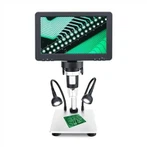
How to use pen type pH meter and moisture analyzer
1. Operation steps of pen type pH meter
(1) Unplug the pH electrode cap of the pen-type pH meter, stir and wash the pH composite electrode in pure water and dry it. Press the button to power on the instrument, and after a few seconds of self-diagnosis (display SELFCAL), the LCD screen will display the pH unit symbol, indicating that it has entered the test state.
(2) Immerse the pH electrode in the pH7.00 calibration solution, shake it slightly, and then place it still for a few seconds. After the displayed value is stable, press and hold the key for 2 seconds. The LCD will display the CAL symbol, and then flash 7.00 for a few seconds. When the final calibration is completed, the LCD screen will first display the SR symbol and then the END symbol, and return to the normal display mode. At this time, the ? symbol will be displayed in the lower left corner of the LCD screen, indicating that the pH7.00 calibration has been completed and is memorized by the chip.
(3) Wash the pH electrode in pure water and dry it, immerse it in the pH4.00 calibration solution, shake it for a few seconds, and then press and hold the key for 2 seconds after the displayed value is stable, and the LCD will display CAL symbol, then flashes 4.00 characters, and when the calibration is completed after a few seconds, the LCD screen will display the SR symbol first and then the END symbol, and return to the normal display mode. At this time, the ? symbol will be displayed in the lower left corner of the LCD screen, indicating that the pH4.00 calibration has been completed and is memorized by the chip.
(4) Wash the pH electrode in pure water and dry it, immerse it in the pH10.01 calibration solution, shake it for a few seconds, and then press and hold the key for 2 seconds after the displayed value is stable, and the LCD will display CAL symbol, and then flash 10.00 characters. After a few seconds, when the calibration is completed, the LCD screen will first display the SR symbol and then the END symbol, and return to the normal display mode. At this time, the ? symbol will be displayed in the lower left corner of the LCD screen, indicating that the pH10.01 calibration has been completed and is memorized by the chip.
(5) For the measurement of the solution to be tested, wash the pH electrode in pure water and dry it, immerse it in the solution to be tested, shake it slightly and place it still, and read it after the number is stable, which is the pH value of the solution to be tested .
Fields of application for moisture analyzers:
The moisture meter is used for preheating, ashing, burning, annealing, tempering, etc. Melting, sintering, high temperature reaction, ultra high temperature reaction and processing, etc. Widely used in various laboratories, suitable for a variety of purposes, combustion, degassing, drying, disinfection and sterilization. Stablize. Sample ashing and testing.
1. Routine laboratories in universities and research institutes: used for routine teaching and experimental research in laboratories of various physics, chemistry, materials, biology, electronics, etc.;
2. Thermal processing, cement, and building materials industries: thermal processing of small workpieces, such as: heating of small precision ceramics, development of new materials, etc.;
3. Medicine
Industry: used for drug inspection, pretreatment of medical samples, etc.;
4. Analytical chemistry industry: sample processing in the fields of water quality analysis, environmental analysis, etc., can also be used for oil and its analysis;
5. American-made analysis: used for determination of moisture, ash content, volatile content, ash melting point analysis, ash composition analysis, elemental analysis, and can also be used in general ashing furnaces.
The Halogen Moisture Analyzer can be widely used in all industries that require rapid determination of moisture, such as medicine, food, feed, seeds, rapeseed, dehydrated vegetables, tobacco, chemical industry, tea, food, meat and textiles, agriculture, forestry, paper, rubber Laboratory and production process requirements for moisture determination in industries such as plastics, textiles, etc.; at the same time meet the determination of moisture content in solids, granules, powders, colloids and liquids.