Multimeter vs Oscilloscope: Differences and Applications
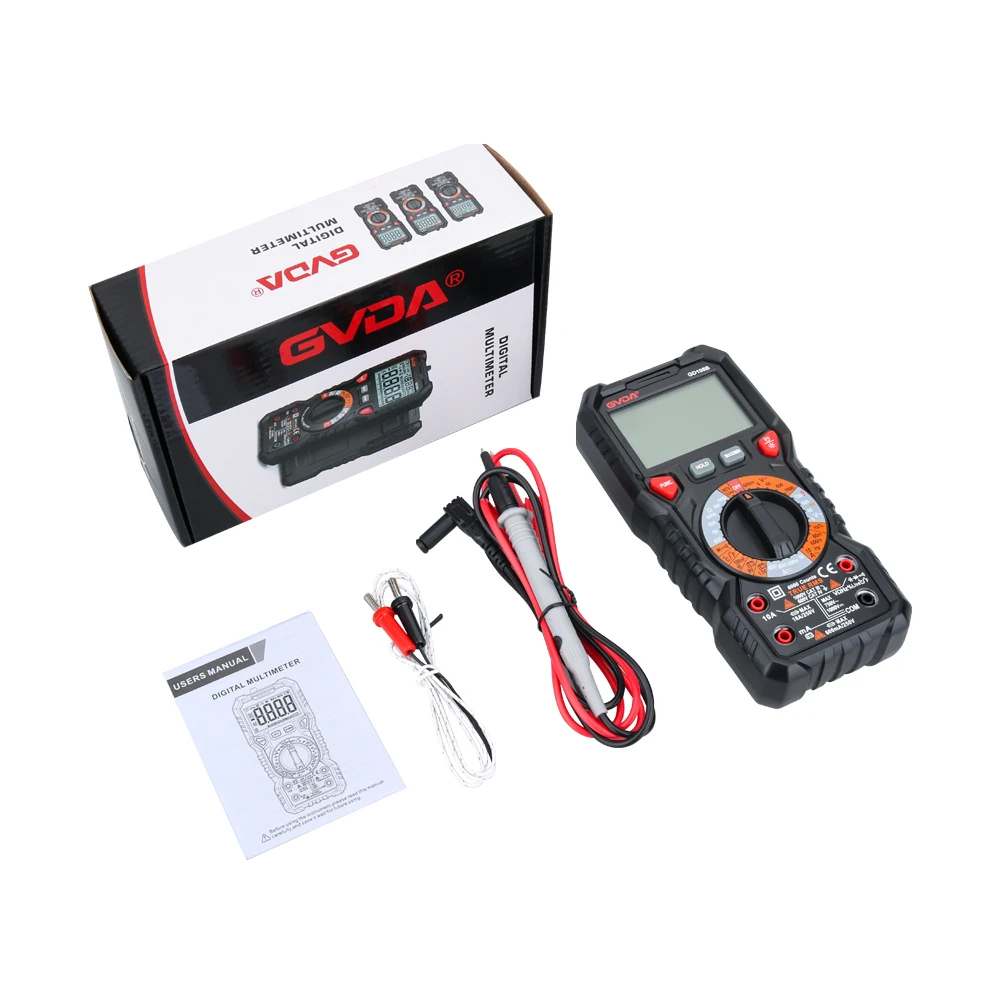
As the name suggests, a digital multimeter is a multi-functional measuring instrument capable of measuring various electrical parameters including voltage, current and resistance. Compared with analog multimeters, digital multimeters deliver higher measurement accuracy by digital technology. They are usually equipped with LCD or LED displays to show readings in numeric form, making measurement results more intuitive and precise.
The core advantage of a digital multimeter lies in its capability for accurate DC offset measurement. It uses an integrating ADC (Analog-to-Digital Converter). This conversion method averages the input signal to reduce noise and interference, thus improving the accuracy of DC measurements. Therefore, digital multimeters are especially suitable for precise measurements of low-frequency or steady signals, such as battery voltage and DC operating points in circuits.
Characteristics and Applications of Oscilloscopes
An oscilloscope is originally designed to observe and analyze how signals change over time. It is an instrument that displays voltage waveforms versus time, widely used for measuring, monitoring and debugging electronic circuits. Its core function is capturing and displaying signal waveforms, allowing users to clearly see how signals vary with time. This is particularly critical for analyzing high-frequency signals or complex waveforms.
Oscilloscopes generally adopt non-integrating ADCs, which means they sample point-by-point and reconstruct signal waveforms. This point-by-point sampling enables oscilloscopes to measure higher-frequency signals and accurately display waveform shape, amplitude, period and other characteristics. Besides, modern oscilloscopes integrate many advanced functions such as Fast Fourier Transform (FFT), waveform storage and playback, and trigger settings, providing powerful capabilities for signal analysis and fault diagnosis.
Comparison of Application Scenarios
When choosing between a digital multimeter and an oscilloscope, the specific test requirements should be considered. Digital multimeters are preferred for accurate measurement of DC offset, resistance and low-frequency signals. For example, digital multimeters are ideal for measuring power supply voltage or checking solder joint continuity during electronic equipment maintenance.
Oscilloscopes, by contrast, are more suitable for waveform analysis, high-frequency signal measurement and observing time-varying signals. During the design and development of electronic products, oscilloscopes are used to verify circuit design correctness, monitor signal integrity and debug timing issues in digital circuits.