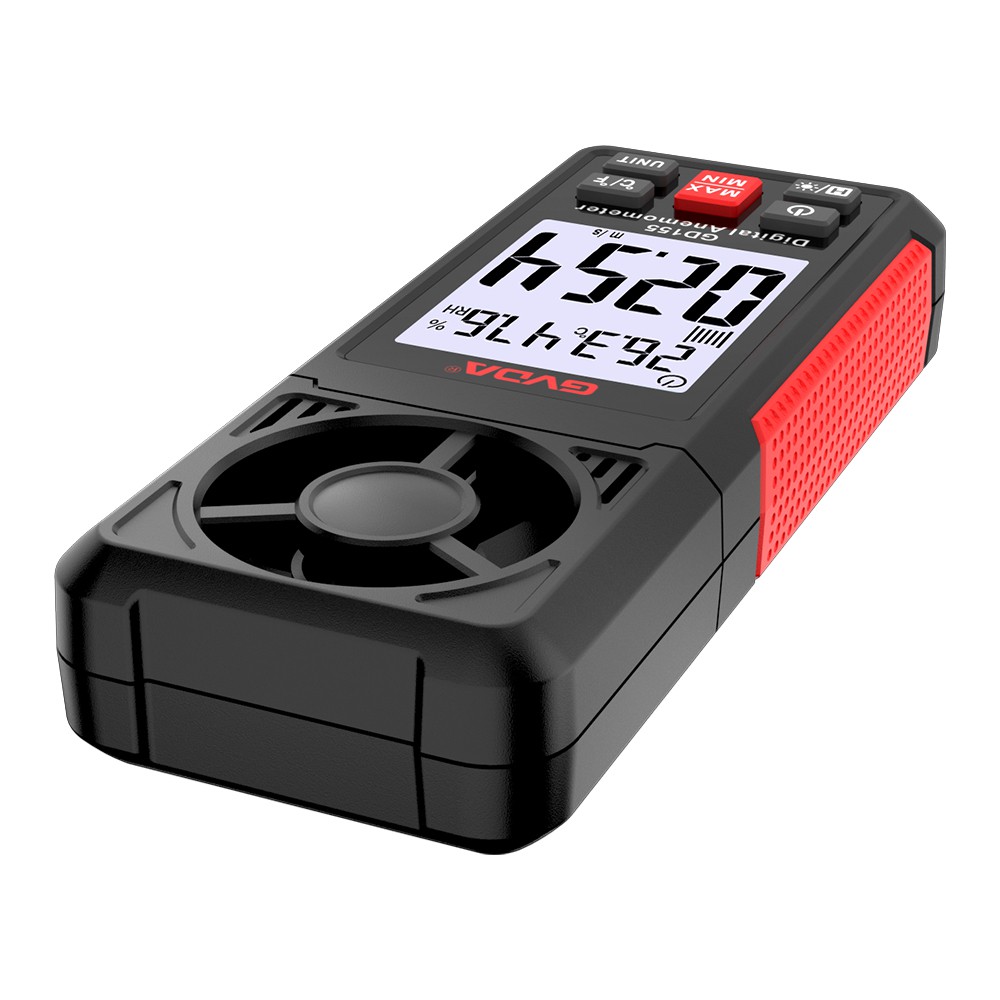
Selection and Application of Anemometer Probes
There are three common methods for measuring wind speed: thermal probes, vane probes, and pitot tubes. When measuring wind speed, how should we select the most suitable instrument? What working conditions are each of these three measurement methods best suited for?
The flow velocity measurement range from 0 to 100 m/s can be divided into three sections: low speed (0 to 5 m/s), medium speed (5 to 40 m/s), and high speed (40 to 100 m/s).Thermal anemometer probes are designed for measurements within 0 to 5 m/s; vane probes deliver optimal results for flow velocities between 5 and 40 m/s; pitot tubes achieve the best performance in high‑speed measurement scenarios.
Thermal probes provide highly sensitive measurement performance, with a general wind speed range of 0–30 m/s.
Vane probes are available with various impeller diameters, and each size corresponds to different applications. For example, a large 100 mm diameter impeller can measure the average wind speed across a circular area of the same diameter. In addition, a protective cover can be fitted to vane probes to accurately measure air volume at small air outlets.
Pitot tubes are mostly used for duct wind speed measurement and are suitable for high wind speed conditions. They are not recommended for wind speeds below 5 m/s.
Temperature resistance is an additional key criterion for proper anemometer probe selection.The operating temperature of standard thermal sensors is approximately -20~70°C.Conventional vane probes also operate within the range of -20~70°C, while customized high‑temperature resistant vane probes can withstand temperatures up to 350°C.Pitot tubes feature the widest temperature adaptability; even standard models can endure high temperatures of up to 600°C.