Probe Selection for Anemometers
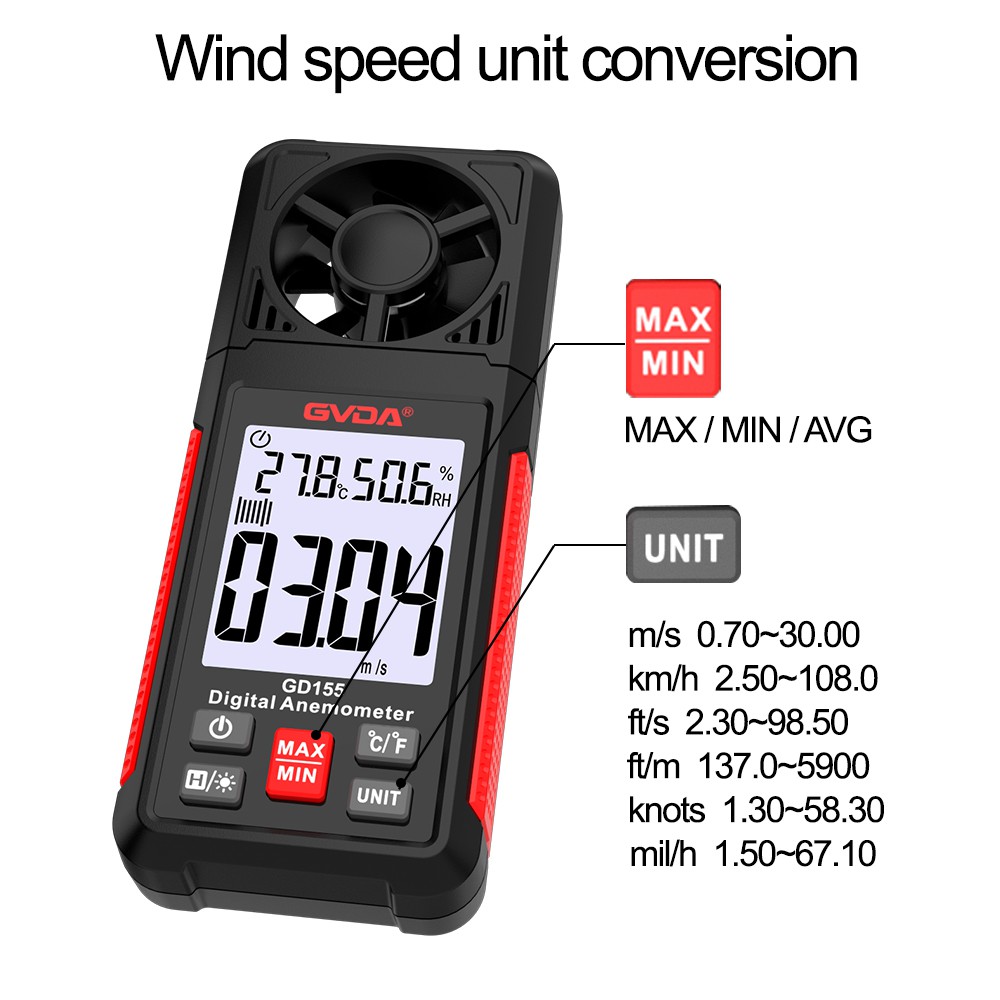
An anemometer is an instrument for measuring air flow velocity. It is available in many types. The cup anemometer is widely used at meteorological stations. Its sensing component consists of three parabolic conical cups fixed to a bracket at 120° intervals, with all concave surfaces facing the same direction. The entire sensing unit is mounted on a vertical rotating shaft. Driven by wind force, the cups rotate around the shaft at a rotational speed proportional to the wind speed. Another rotary anemometer is the propeller type, whose sensing part is a three‑bladed or four‑bladed propeller installed at the front end of a wind vane to continuously face the incoming wind. The blades rotate around a horizontal axis at a speed proportional to the wind velocity. Other common types include thermal anemometers, which operate on the principle that the heat dissipation rate of a heated object varies with wind speed, and ultrasonic anemometers, which measure wind speed based on changes in sound wave propagation velocity caused by airflow.
Anemometer Probe Selection
The flow velocity range of 0 to 100 m/s is divided into three segments: low speed (0 to 5 m/s), medium speed (5 to 40 m/s), and high speed (40 to 100 m/s). Thermal probes are ideal for accurate measurement within 0 to 5 m/s; rotating vane probes deliver optimal performance for flow velocities from 5 to 40 m/s; and pitot tubes achieve the best results in high‑speed measurement.
Temperature is an additional key factor for selecting the proper anemometer probe. The operating temperature of standard thermal sensors ranges from approximately -20 °C to 70 °C. Specialized rotating vane probes can withstand temperatures up to 350 °C, while pitot tubes are suitable for working conditions above 350 °C.