Determination Methods and Instructions of Anemometers
Meteorological wind observation consists of two parts: wind direction observation and wind speed observation. Wind direction indicates the origin of horizontal airflow, commonly expressed by 16 geographical bearings in surface meteorological observation. Wind speed means the distance air travels per unit time, with the unit of m/s.
In addition to instantaneous wind speed and direction, wind measurement mainly adopts the arithmetic averaging method or vector averaging method to calculate average wind speed and wind direction, or uses prevailing wind direction to replace the average wind direction. Average wind generally refers to the time-averaged value of instantaneous wind, and the difference between instantaneous wind and average wind is turbulent wind.
Wind vanes are applied for wind direction measurement, and real-time changes of wind direction are recorded through automatic recording methods such as mechanical transmission, electrical transmission and photoelectric conversion.
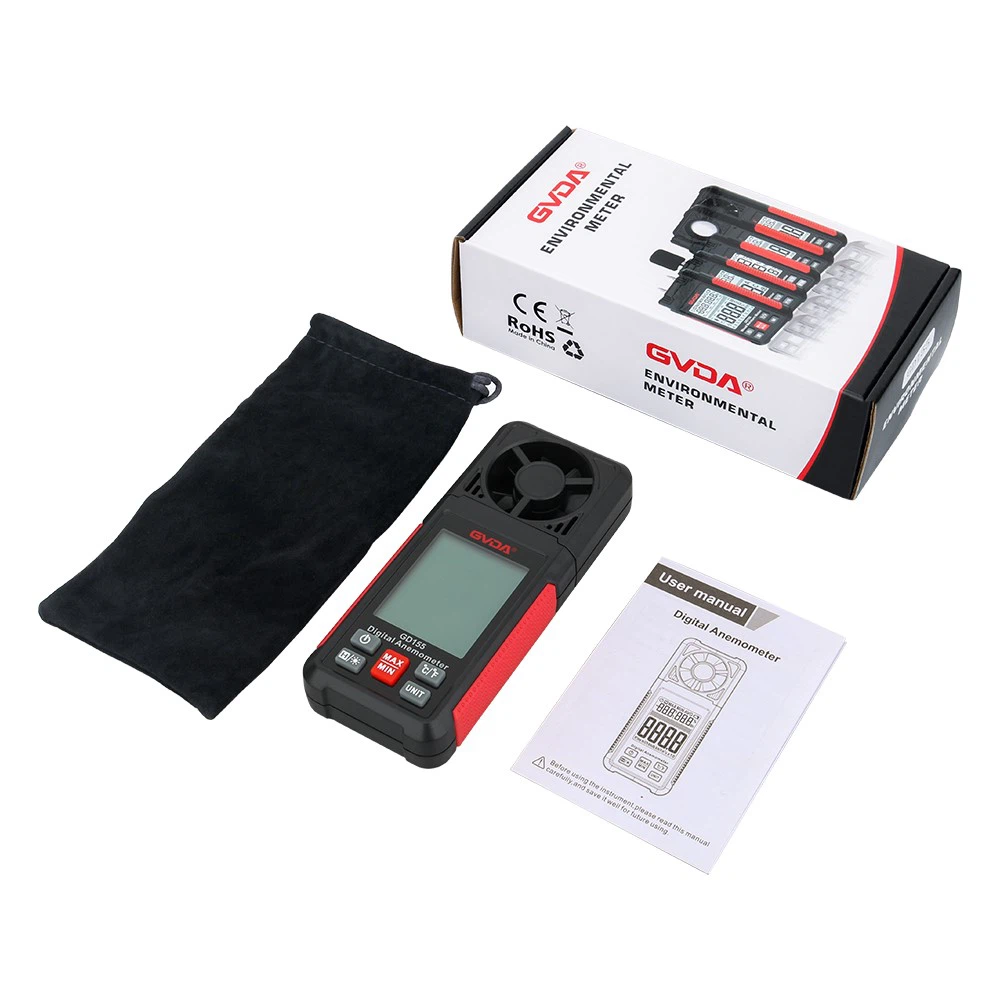
Anemometers are used for wind speed measurement. The commonly used anemometers are classified into the following four types:
Rotary anemometers;
Pressure-type anemometers: Wind speed is measured based on the pressure effect of wind, as wind pressure is proportional to the square of wind speed;
Thermal anemometers: Wind speed is measured by the feature that the heat dissipation rate of heated objects is related to ambient air flow velocity;
Ultrasonic anemometers: Wind speed is measured according to the functional relationship between the propagation speed of sound waves in the atmosphere and wind speed.
Wind speed measurement usually has relatively large errors, which are mainly caused by the hysteresis effect of anemometers.